






What's Happening?
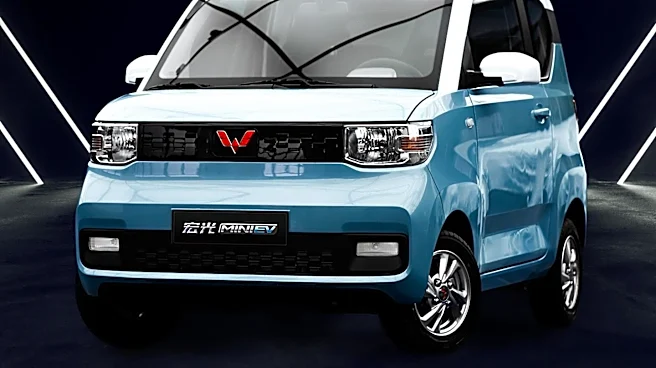
Chris Larsen, cofounder and executive chairman of Ripple, has suggested that California should permit the sale of Chinese-made electric vehicles (EVs) to low-income buyers. During an interview on the podcast 'On with Kara Swisher,' Larsen specifically
mentioned the BYD Seagull, a $10,000 car, as an example of an affordable option that could address the high cost of vehicles and elevated gas prices in California. He argued that these sales should be income-qualified, acknowledging that the U.S. currently does not produce such affordable EVs. This proposal directly contrasts with the stance of much of the U.S. auto industry, which is advocating for a ban on Chinese vehicles due to economic and national security concerns.
Why It's Important?
Larsen's proposal highlights a significant tension between consumer affordability, environmental goals, and national economic and security interests. For low-income Californians, access to affordable EVs could alleviate the burden of high transportation costs, especially with gas prices exceeding $0.60 per gallon due to excise taxes. This could also accelerate the state's transition to electric vehicles, contributing to climate goals. However, the U.S. auto industry views Chinese EVs as a threat, citing subsidized manufacturing and potential national security risks associated with connected technology. Allowing Chinese EVs could impact domestic manufacturing jobs and the competitiveness of American automakers, creating a complex policy dilemma for lawmakers.
What's Next?
Larsen's suggestion is likely to spark further debate among policymakers, industry leaders, and consumer advocates in California and at the federal level. The Alliance for Automotive Innovation, representing U.S. automakers, has already urged Congress to enact a ban on Chinese vehicles. Any move to allow Chinese EVs into the California market, even for specific income groups, would face significant opposition from domestic industry and national security proponents. Conversely, advocates for affordability and environmental sustainability may rally behind Larsen's idea. The discussion could lead to legislative proposals, trade negotiations, or further studies on the economic and security implications of importing Chinese EVs.
Beyond the Headlines
This issue extends beyond just car sales; it touches on broader themes of global trade, economic inequality, and technological competition. The debate over Chinese EVs in the U.S. market reflects the ongoing geopolitical rivalry and the challenges of balancing free trade principles with national interests. It also underscores the growing divide in access to sustainable technologies, where affordable options are often produced abroad. The 'income-tested' aspect of Larsen's proposal raises questions about targeted economic policies and whether such measures could create a two-tiered market. Ultimately, the resolution of this debate will have implications for U.S. industrial policy, consumer choice, and the future of electric vehicle adoption.