
What's Happening?
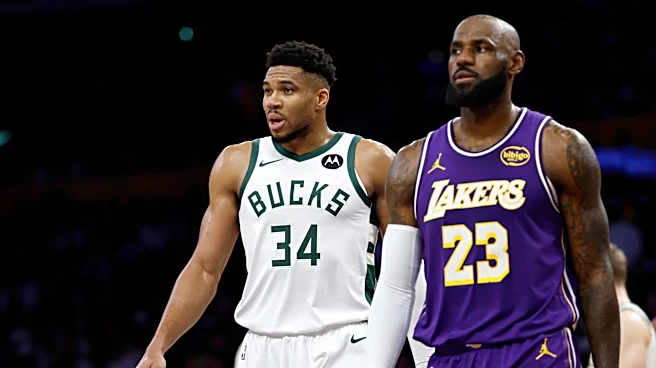
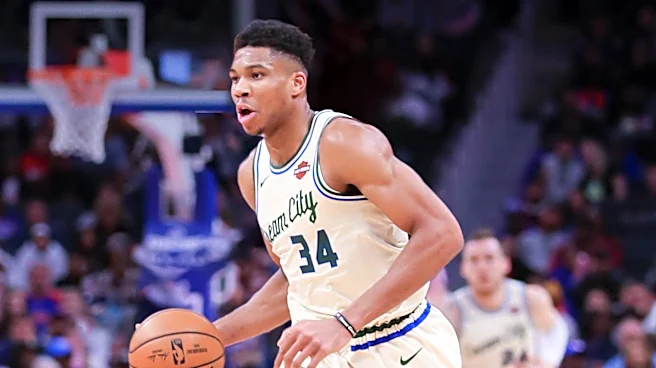
The Boston Celtics were in negotiations to acquire Giannis Antetokounmpo from the Milwaukee Bucks but ultimately decided against including rookie Hugo Gonzalez in the trade. This decision allowed the Miami
Heat to secure Antetokounmpo, significantly impacting the Celtics' roster strategy. The Celtics' refusal to trade Gonzalez, despite his limited performance, was a pivotal moment that led to the Heat's acquisition of Antetokounmpo. Subsequently, the Celtics traded Jaylen Brown to the Philadelphia 76ers, further altering the dynamics of the Eastern Conference. These moves have reshaped the competitive landscape, with the Heat and 76ers emerging as strong contenders.
Why It's Important?
The Celtics' decision not to trade Gonzalez highlights the complex considerations teams face in player negotiations, balancing immediate gains against long-term potential. This choice has had a ripple effect, influencing the composition of several teams and altering the competitive balance in the Eastern Conference. The Heat's acquisition of Antetokounmpo and the 76ers' addition of Brown and LeBron James have positioned these teams as formidable opponents. The Celtics' strategy reflects the challenges of maintaining competitiveness while managing player development and team chemistry.
What's Next?
The Celtics will need to reassess their roster strategy and explore opportunities to strengthen their team in the wake of these significant trades. The Heat and 76ers, having bolstered their lineups, will focus on building team cohesion and maximizing the impact of their new acquisitions. As the NBA season approaches, these teams will be closely watched to see how their strategic decisions play out on the court. The evolving dynamics of the Eastern Conference promise an exciting and competitive season ahead.