
What's Happening?
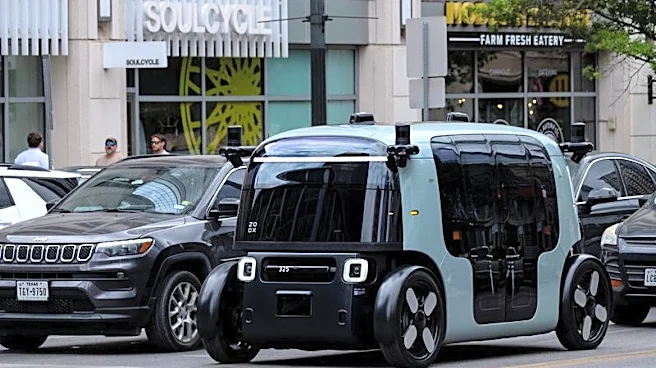
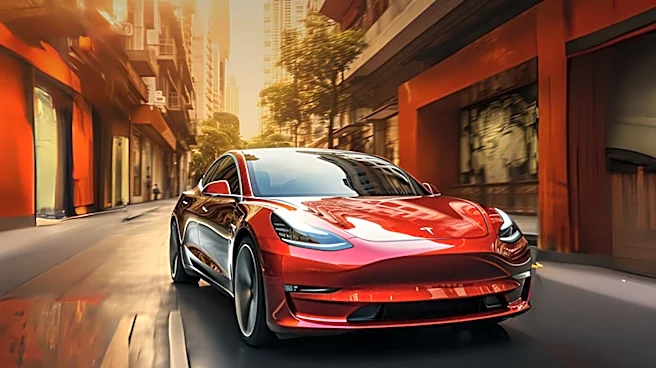
Baidu and Tesla are intensifying their competition in the global robotaxi market, marking a pivotal moment in the race for autonomous driving supremacy. Tesla's Full Self-Driving (FSD) Beta program and Baidu's Apollo Go are at the forefront, with Tesla focusing
on international scalability and Baidu leveraging its stronghold in China's ride-hailing market. This rivalry is set to influence the pace of innovation and consumer trust in autonomous systems, while also highlighting geopolitical dynamics in AI technology.
Why It's Important?
The competition between Baidu and Tesla is significant as it involves two major players from the world's largest economies, the U.S. and China. The outcome will not only dictate the future of urban mobility but also impact regulatory approaches and consumer adoption of autonomous vehicles. Governments and regulators have a stake in this race, as the commercialization of robotaxis could demonstrate leadership in the AI arms race. Traditional taxi operators and ride-hailing giants may face obsolescence, while consumers could benefit from reduced transportation costs.
What's Next?
In the coming months, Baidu is expected to expand Apollo Go into smaller cities in China, while Tesla may accelerate partnerships in Europe and Asia-Pacific. Both companies will likely invest in consumer education to build trust in autonomous systems. The geopolitical dimension will intensify, with China and the U.S. using these companies as proxies in their broader competition for AI supremacy.
Beyond the Headlines
Safety remains a critical concern for autonomous driving, with both companies needing to prove the reliability of their platforms. Regulatory approval is not guaranteed, and societal implications such as labor displacement and public transit erosion could exacerbate inequalities. The narrative also overlooks long-term impacts on employment and urban planning.