






What's Happening?
Cyber Monday is an annual online shopping event occurring on the Monday after Thanksgiving, where retailers offer significant discounts through their websites and online stores. This event allows consumers to purchase items from home using various devices,
avoiding the need to visit physical locations. Major retailers such as Amazon, Walmart, Target, Old Navy, and Best Buy participate, providing promotions across a wide range of product categories, including clothing, beauty products, electronics, and household items. The concept of Cyber Monday originated in 2005 when the National Retail Federation’s online division observed a surge in online shopping on the Monday following Thanksgiving. This trend was attributed to employees using faster internet connections at work to browse and purchase holiday gifts after returning from the holiday weekend. Retailers capitalized on this behavior by coining the term and promoting special online discounts, quickly establishing Cyber Monday as a significant part of the holiday shopping season.
Why It's Important?
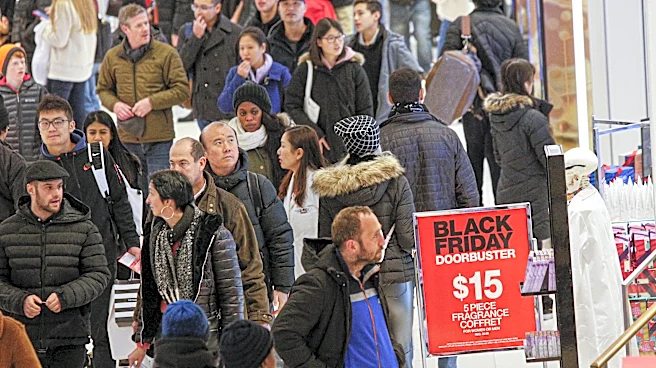
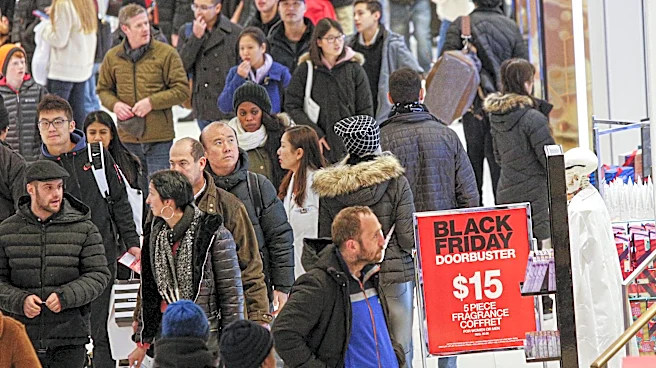
Cyber Monday plays a crucial role in the U.S. retail sector by driving substantial online sales and providing a convenient alternative to traditional in-store shopping. It allows consumers to compare prices across different retailers and secure holiday gifts without the stress of crowded stores and long lines, which were historically associated with Black Friday. For businesses, Cyber Monday represents a critical period for revenue generation, often extending the holiday shopping frenzy beyond the Thanksgiving weekend. The event's success has also influenced the broader retail strategy, leading many retailers to integrate online deals into their Black Friday promotions and extend sales periods. This blurring of lines between Black Friday and Cyber Monday reflects a shift in consumer behavior towards digital platforms, making online accessibility and competitive pricing paramount for retailers aiming to capture market share during the holiday season.
What's Next?
The distinction between Black Friday and Cyber Monday is expected to continue blurring, with retailers likely to offer extended sales periods that encompass both events and potentially begin even earlier in November. This trend suggests a move towards a more prolonged 'Cyber Week' or 'Holiday Shopping Season' rather than distinct single-day events. Consumers can anticipate a continued emphasis on online deals, with retailers focusing on seamless e-commerce experiences, competitive pricing, and potentially personalized promotions. The convenience offered by online shopping, a core tenet of Cyber Monday, will likely remain a key driver for consumer engagement. Retailers will continue to adapt their strategies to meet evolving shopping habits, ensuring that online platforms remain central to their holiday sales efforts.
Beyond the Headlines
The evolution of Cyber Monday highlights a broader societal shift towards digital consumption and the increasing importance of e-commerce in the U.S. economy. It underscores how technological advancements, particularly internet accessibility, have reshaped traditional retail models. The event also raises questions about consumer behavior, such as the psychological impact of limited-time offers and the convenience factor influencing purchasing decisions. Furthermore, the environmental implications of increased online shipping and packaging, as well as the labor practices within the e-commerce fulfillment sector, are deeper considerations that extend beyond the immediate sales figures. Cyber Monday, therefore, serves as a microcosm of the ongoing digital transformation in retail, with long-term implications for urban planning, logistics, and the future of brick-and-mortar stores.