




What's Happening?
Tesla reported its second-quarter earnings, revealing a revenue of $28.24 billion, which exceeded analysts' expectations of $26.31 billion. However, the company's quarterly profit fell short of Wall Street's projections, with an adjusted earnings per
share (EPS) of 33 cents compared to the anticipated 50 cents. This discrepancy led to a more than 4% drop in Tesla's stock price after hours. The company highlighted its record vehicle deliveries and significant investments in AI, robotaxi, and robotics as key factors in its financial performance. Tesla's capital expenditures increased by 142% year-over-year to $5.8 billion, marking a substantial investment phase aimed at revolutionizing transportation and energy sectors.
Why It's Important?
Tesla's financial results underscore the challenges of balancing growth with profitability, especially as the company invests heavily in future technologies. The missed profit expectations could impact investor confidence, particularly as Tesla navigates a competitive electric vehicle market and broader economic uncertainties. The company's focus on AI and robotics signifies a strategic shift that could redefine its business model and influence the broader automotive and tech industries. Stakeholders, including investors and industry analysts, will be closely monitoring Tesla's ability to manage its ambitious expansion plans while maintaining financial stability.
What's Next?
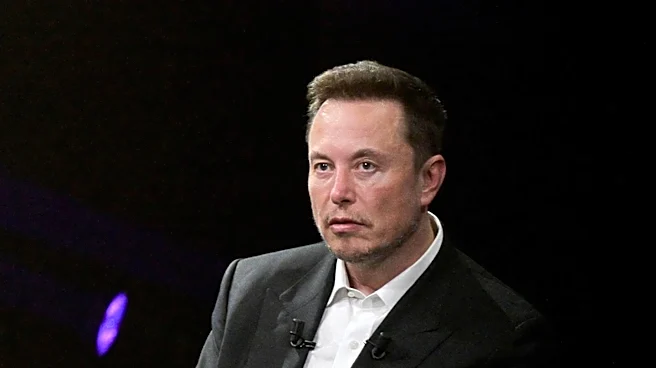
Tesla plans to continue its aggressive investment strategy, with a focus on expanding its manufacturing capabilities and advancing its AI and robotics initiatives. The company aims to carefully roll out its robotaxi technology to avoid reputational risks. Additionally, Tesla's future financial performance will likely be scrutinized for signs of improved profitability and operational efficiency. The market will also watch for any developments regarding potential synergies with SpaceX, as hinted by CEO Elon Musk, which could further influence Tesla's strategic direction.