



What's Happening?
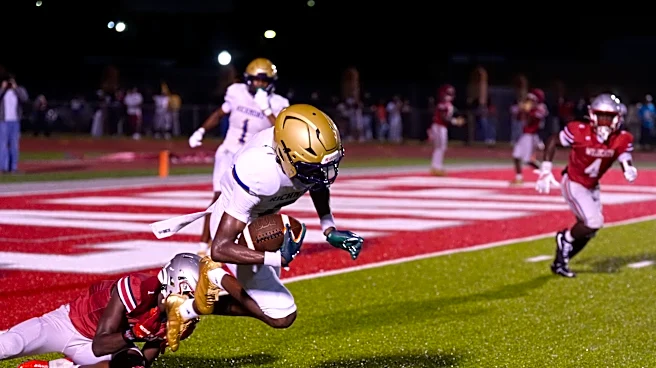
Jim Abbott, a veteran high school football official, had part of his leg amputated above the knee after sustaining a severe injury during a game on August 14 at Withrow High School. Abbott, who was serving as the umpire, was positioned behind the defensive
line when he was hit by a player. He recounted that a cornerback attempting a tackle missed the running back but hit him, and then a linebacker also made contact. The force of the impact damaged his previously replaced right knee, turning it into what he described as a 'weapon' that 'shredded anything and everything inside my leg.' Abbott was transported to UC Medical Center, where he later learned of the amputation. Despite the life-altering injury, Abbott has maintained a positive outlook, expressing concern for the players involved and stating that it was an inherent risk of football.
Why It's Important?
This incident highlights the significant physical risks faced by sports officials, even in non-contact roles, and underscores the need for ongoing safety considerations in athletic events. Abbott's injury brings attention to the potential for severe, career-ending, and life-altering consequences for individuals dedicated to facilitating sports. The situation also emphasizes the emotional and psychological impact on players involved in such incidents, as Abbott's primary concern was that they not feel guilty. The rallying support from the Ohio Valley Football Officials Association and the broader community demonstrates the solidarity within the officiating community and the importance of support systems for those who sustain injuries in the line of duty. This event could prompt discussions about enhanced safety protocols for officials and improved insurance or support mechanisms for those who are injured.
What's Next?
Jim Abbott is currently awaiting placement in a rehabilitation facility outside of the hospital to begin his recovery. He has expressed a strong determination to 'attack' his rehabilitation with all his energy, with the ultimate goal of returning to officiate varsity football games. The Ohio Valley Football Officials Association has publicly shown its support for Abbott, indicating a community effort to aid in his recovery. His journey through rehabilitation and potential return to the field will likely be closely watched by the officiating community and could serve as an inspiration. Discussions around official safety and support within high school sports organizations may also gain traction as a result of this incident.
Beyond the Headlines
Abbott's story transcends the immediate physical injury, touching upon the deep passion and dedication many individuals have for sports officiating. His immediate concern for the players involved, rather than self-pity, speaks to a profound sense of sportsmanship and community within athletics. The incident also raises broader questions about the long-term care and support available for sports officials who suffer severe injuries, particularly in amateur or high school settings where resources might be more limited compared to professional sports. It could spark a re-evaluation of how officials are protected, both physically and financially, and how their invaluable contributions to sports are recognized and safeguarded against unforeseen circumstances. The psychological resilience demonstrated by Abbott in the face of such a drastic life change offers a powerful narrative on human spirit and adaptation.