







What's Happening?
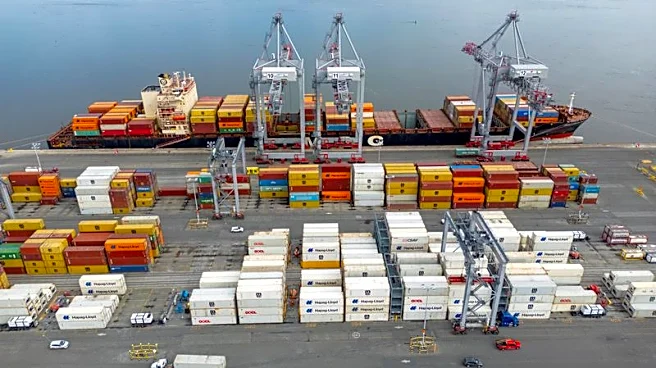
The U.S.-Mexico-Canada Agreement (USMCA), enacted in 2020, is under review as of July 1, 2026. This trade pact, which replaced the North American Free Trade Agreement (NAFTA), has significantly impacted U.S. agricultural exports, with Canada and Mexico being
major destinations. In 2024, U.S. agricultural exports to these countries totaled nearly $60 billion, representing a substantial portion of the U.S. ag export market. The review process is crucial as it will determine whether the agreement will be renewed for another 16 years. Key issues include increased U.S. tariffs on imports from Canada and Mexico, compliance with agricultural trade standards, and border-related challenges.
Why It's Important?
The USMCA is vital for the U.S. agricultural sector, supporting approximately 13 million jobs and facilitating significant trade volumes. The agreement's renewal is crucial for maintaining economic stability and growth in the agricultural industry. The review process could lead to changes in trade dynamics, affecting farmers, exporters, and related industries. The outcome will influence trade policies and economic relations between the U.S., Canada, and Mexico, impacting the broader North American economy. Ensuring the continuation of the USMCA is essential for sustaining agricultural trade and economic vitality in the region.
What's Next?
The review process will involve negotiations among the U.S., Canada, and Mexico to address existing issues and determine the future of the USMCA. If the agreement is renewed, it will remain in place until 2036, with the next review scheduled for 2032. However, if the countries cannot reach an agreement, the current pact could expire, leading to uncertainty in agricultural trade. Stakeholders, including agricultural organizations and policymakers, will play a crucial role in advocating for the agreement's continuation, emphasizing its importance for economic stability and growth.