



What's Happening?
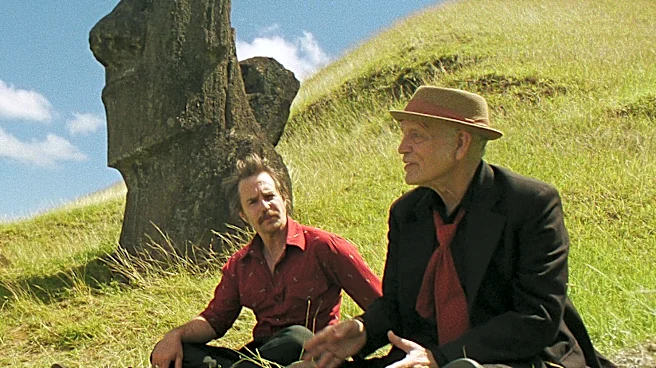
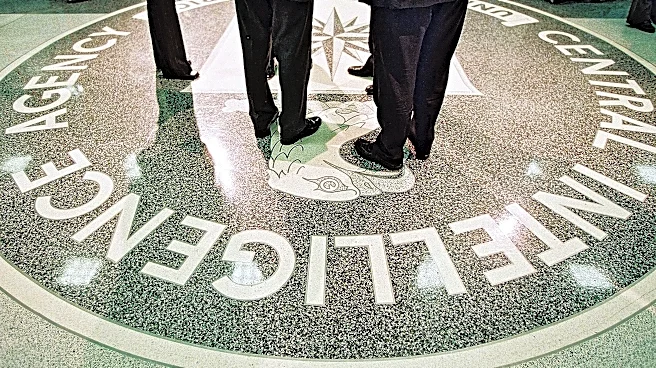
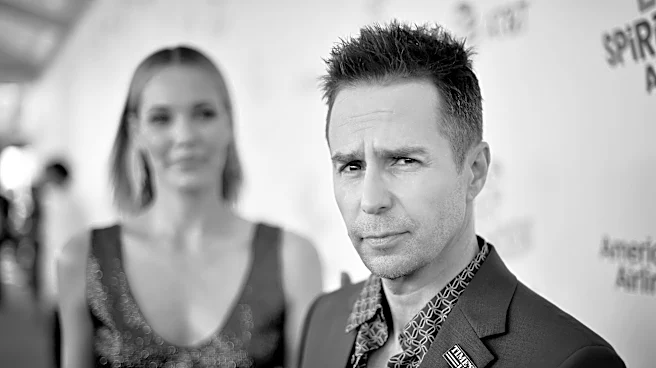
Film reviewer Dan Webster has provided a review of Martin McDonagh's latest film, 'Wild Horse Nine.' The movie stars John Malkovich and Sam Rockwell as Central Intelligence Agency (CIA) operatives Chris and Lee, respectively. Set in Chile during the summer
of 1973, just before the coup d’etat that led to the death of President Salvador Allende, the film explores themes of truth, loyalty, and love. Webster highlights McDonagh's consistent focus on the consequences of actions and the complexities of relationships, drawing parallels to his previous works like 'In Bruges,' 'Three Billboards Outside Ebbing, Missouri,' and 'The Banshees of Inisherin.' The plot follows Chris and Lee, who were instrumental in facilitating the coup, as they are dispatched to Rapa Nui (Easter Island) by their handler, MJ (Steve Buscemi). The film delves into Chris's regret over his past actions as an assassin and his struggle with the moral implications of his work.
Why It's Important?
This film review is important as it sheds light on a new cinematic work that tackles sensitive historical and political themes, particularly the involvement of the CIA in foreign coups. The setting in 1973 Chile, a period marked by significant political upheaval and U.S. intervention, offers a critical lens through which to examine historical events and their long-lasting impacts. The film's exploration of an assassin's regret and moral questioning can resonate with audiences interested in the human cost of political actions. Furthermore, the review highlights the performances of seasoned actors John Malkovich and Sam Rockwell, suggesting a compelling narrative that blends humor and drama. For American audiences, the film could spark discussions about the U.S.'s historical foreign policy and the ethical dilemmas faced by individuals involved in such operations, potentially influencing public perception and historical understanding.
What's Next?
As 'Wild Horse Nine' is a film review, the immediate 'What's Next?' pertains to its reception by a broader audience and critics. The film's release will likely generate further discussions and analyses regarding its historical accuracy, artistic merit, and the political messages it conveys. Depending on its critical and commercial success, 'Wild Horse Nine' could contribute to ongoing conversations about the role of the U.S. in international affairs and the ethical responsibilities of intelligence agencies. The performances of Malkovich and Rockwell, praised by Webster, may also garner awards season attention, further elevating the film's profile. Additionally, the film's themes could inspire other filmmakers and artists to explore similar historical periods and political narratives, fostering a deeper engagement with complex historical events.
Beyond the Headlines
Beyond its immediate narrative, 'Wild Horse Nine' touches upon deeper implications concerning national identity and historical memory. By portraying the CIA's involvement in the 1973 Chilean coup, the film implicitly challenges or reinforces existing narratives about American foreign policy. It invites viewers to confront the less-discussed aspects of U.S. history and the ethical ambiguities inherent in international power dynamics. The character of Chris, grappling with his past as an assassin, symbolizes a broader societal reckoning with accountability and the long-term psychological toll of political violence. The film's blend of humor and drama, as noted by Webster, suggests a nuanced approach to these heavy themes, potentially making them more accessible to a wider audience and encouraging introspection about the 'truth of what, despite all our mythology, we Americans are – and are not.'