







What's Happening?
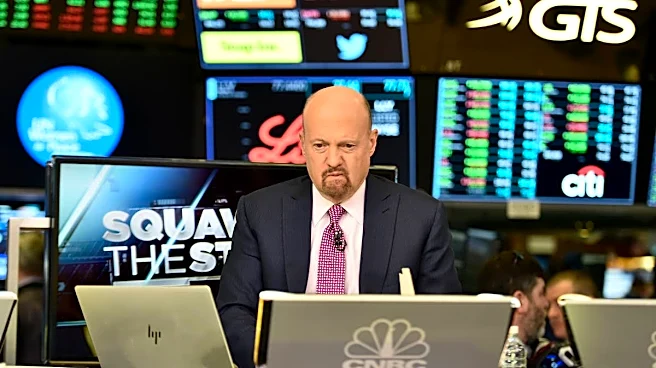
Jim Cramer, host of CNBC's Mad Money, has expressed a bullish stance on SK Hynix, a major player in the memory chip market, while cautioning investors about the inherent boom-and-bust nature of the industry. The demand for memory chips, particularly high-bandwidth
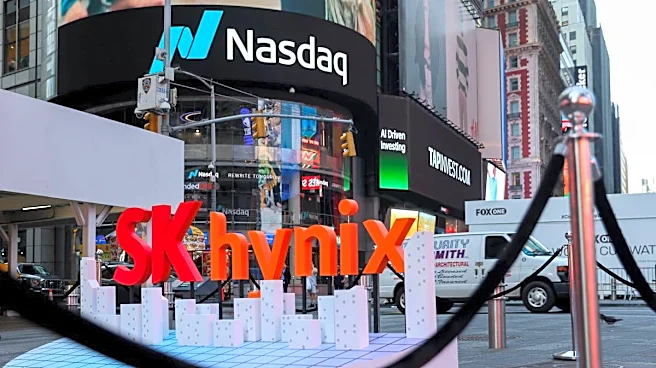
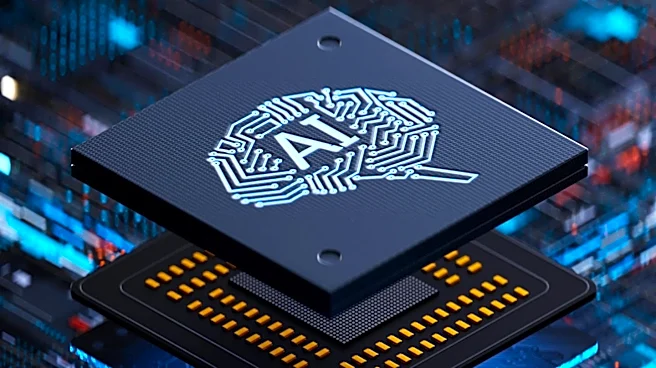
memory (HBM) used in AI accelerators and GPU systems, has surged due to the expansion of hyperscalers like Amazon Web Services and Microsoft Azure. This demand has led to a shift in production away from consumer electronics, causing price increases for devices like smartphones. Despite the current boom driven by AI, Cramer warns that the memory chip market is historically volatile, with periods of oversupply leading to price crashes. SK Hynix recently listed its American depositary receipts on Nasdaq, raising $26.5 billion, and has secured multi-year agreements with companies like Nvidia to stabilize demand and revenue.
Why It's Important?
The current surge in demand for memory chips due to AI development is reshaping the traditional boom-bust cycle of the industry. This shift has significant implications for U.S. investors and the tech industry, as it affects the pricing and availability of consumer electronics. The prioritization of HBM production over DRAM for consumer devices is leading to higher costs for everyday technology. For investors, the volatility of the memory chip market presents both opportunities and risks. While companies like SK Hynix are benefiting from the AI boom, the potential for a future oversupply could impact stock prices and profitability. The situation underscores the importance of strategic investments and the need for companies to manage supply chain risks effectively.
What's Next?
Looking ahead, the memory chip market may continue to experience volatility as supply eventually catches up with demand. New fabrication plants, which are costly and complex to build, are not expected to come online until 2027 or 2028. This delay could prolong the current supply constraints and high prices. However, as AI systems become more efficient, the demand for memory chips may stabilize, potentially leading to a return of the cyclical nature of the market. Investors and industry stakeholders will need to monitor these developments closely, as they could influence future investment strategies and market dynamics.