





What's Happening?
Netflix's significant influence on the Korean drama (K-drama) industry is being scrutinized, particularly regarding its impact on creator compensation and intellectual property (IP) rights. While Netflix has brought global success and increased budgets
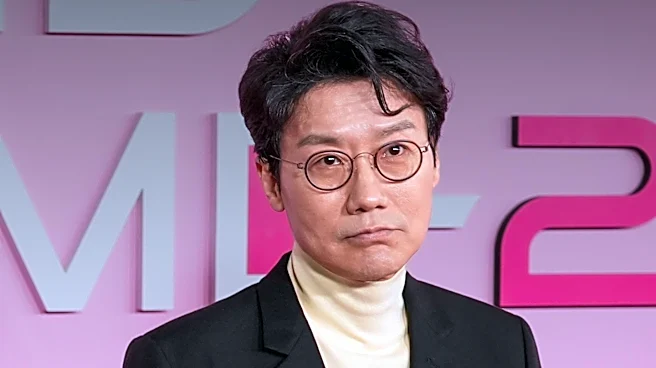
to K-dramas, exemplified by the massive profitability of 'Squid Game' for the streaming giant, the original creators often do not reap proportional financial benefits. Hwang Dong-Hyuk, the creator of 'Squid Game,' reportedly stated he is 'not that rich' despite his show generating billions for Netflix. Historically, the K-drama industry saw independent production companies and screenwriters receiving limited profits, with major networks and A-list actors benefiting most. Netflix initially licensed dramas but later shifted to commissioning and fully purchasing IP, leading to increased production budgets but often requiring creators to forfeit long-term profit for upfront payments.
Why It's Important?
This situation highlights a critical issue in the global entertainment industry: the balance of power between major streaming platforms and content creators. While Netflix's investment has undeniably elevated K-dramas to an international stage, it has also created a 'Netflix Trap' where creators and independent production companies may sacrifice long-term financial gains and IP ownership for immediate funding. This dynamic can stifle creativity, as producers might opt for 'safe' storylines to secure funding rather than taking risks on original concepts, as seen with 'Squid Game' initially being rejected by domestic companies. The disparity in profit distribution raises questions about fair compensation for creative labor and the sustainability of a vibrant, innovative content ecosystem when IP rights are concentrated in the hands of a few powerful distributors.
What's Next?
The ongoing debate over creator compensation and IP rights in the K-drama industry, exacerbated by Netflix's model, is likely to intensify. Korean producers and screenwriters may seek new strategies to retain more control over their intellectual property and negotiate more equitable profit-sharing agreements. This could involve forming stronger unions, advocating for policy changes, or exploring alternative funding and distribution models that allow them to benefit more directly from global successes. The increasing number of international streaming platforms entering the K-drama market could also create more competitive bidding for content, potentially giving creators more leverage. However, without significant shifts in contractual norms, the challenge of balancing short-term financial security with long-term creative and economic independence will persist.
Beyond the Headlines
The 'Netflix Trap' in the K-drama industry reflects a broader ethical and economic dilemma in the digital age, where platforms often become more valuable than the content they host. This situation raises fundamental questions about artistic ownership, the value of creative labor, and the impact of globalization on local cultural industries. When creators are compelled to surrender IP rights, it not only affects their personal wealth but also the cultural sovereignty of their work, as the narrative and commercial control shifts to foreign entities. This can lead to a homogenization of content or a prioritization of globally marketable themes over culturally specific ones. The long-term implications could include a decline in truly original and diverse storytelling if creators feel disincentivized to take risks, ultimately impacting the richness and authenticity of the K-drama landscape.