





What's Happening?
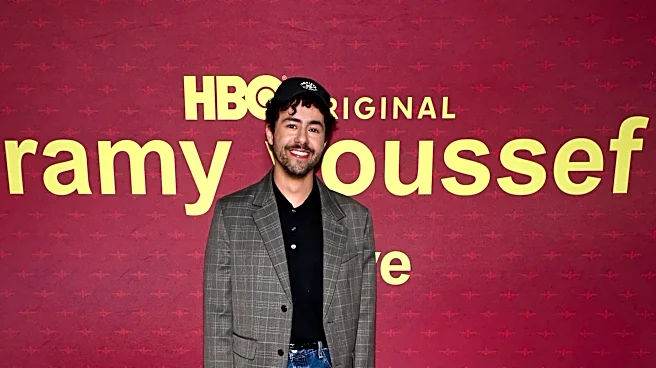
Egyptian-American actor and comedian Ramy Youssef, known for his Amazon Prime Video series "Ramy," publicly called for an urgent and lasting ceasefire in Gaza ahead of the 96th Oscar Awards. Youssef, along with other prominent Hollywood figures such as Mark
Ruffalo and Billie Eilish, wore red pins symbolizing their support for a ceasefire. He stated to the media that the call was for peace and lasting justice for the Palestinian people, emphasizing a universal message to stop killing children. This advocacy was part of a broader movement at the Oscars, where protests for a ceasefire took place outside the Dolby Theatre, causing delays to the ceremony. Many attendees wore red pins as a unified statement from the Artists4Ceasefire platform.
Why It's Important?
The public stance taken by Ramy Youssef and other Hollywood celebrities at a high-profile event like the Oscars amplifies the call for a ceasefire in Gaza, bringing the issue to a global audience. This collective action by influential figures can sway public opinion and put pressure on political leaders and policymakers. The visibility of such advocacy at a major cultural event underscores the intersection of entertainment and sociopolitical issues, demonstrating how artists use their platforms to address humanitarian concerns. For the U.S., this reflects a growing sentiment among some public figures regarding the conflict, potentially influencing domestic discourse and foreign policy debates related to the Middle East.
What's Next?
The continued advocacy by figures like Ramy Youssef is likely to sustain public discussion around the Gaza conflict within the entertainment industry and beyond. Such high-profile endorsements may encourage more public figures to voice their opinions, potentially leading to further organized efforts or campaigns. The U.S. administration may face continued pressure from various groups, including those influenced by celebrity activism, to adjust its diplomatic approach to the conflict. Future award ceremonies and public events could also become platforms for similar expressions of solidarity or protest, indicating a sustained engagement from the arts community on global humanitarian issues.
Beyond the Headlines
The actions of Ramy Youssef and his peers highlight a broader trend of artists engaging in political and social activism, challenging the traditional separation between entertainment and global affairs. This engagement can spark important conversations about the role of celebrities in advocacy, the ethics of using cultural platforms for political statements, and the potential impact of such actions on public perception and policy. It also reflects a growing awareness and concern among the American public and its cultural figures regarding international conflicts, pushing for a more humanitarian-focused foreign policy. The use of symbolic gestures, like the red pins, also demonstrates a sophisticated approach to collective action and message dissemination in the digital age.