





What's Happening?
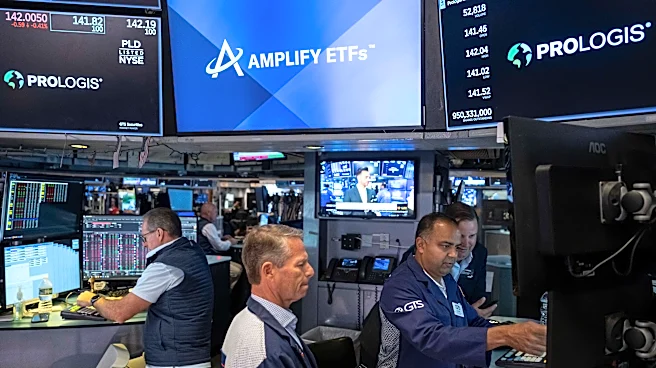
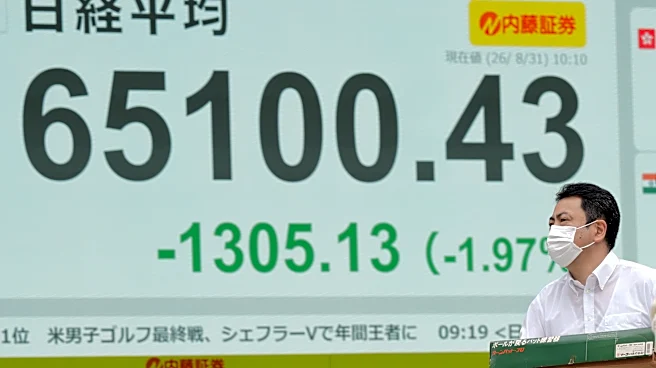
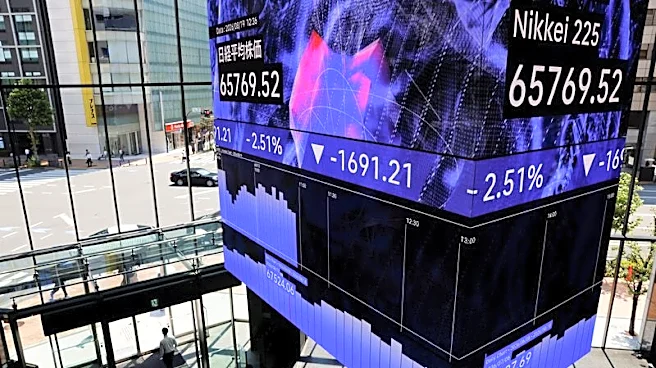
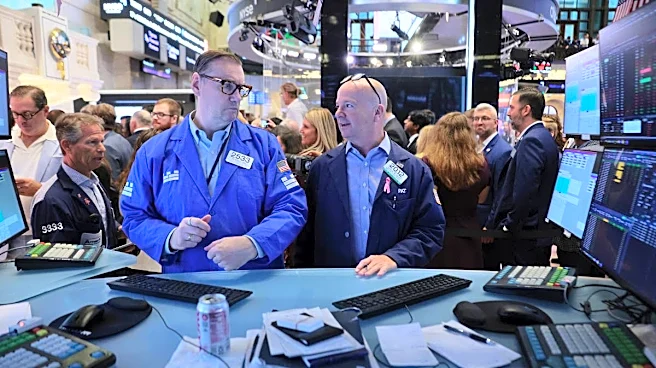
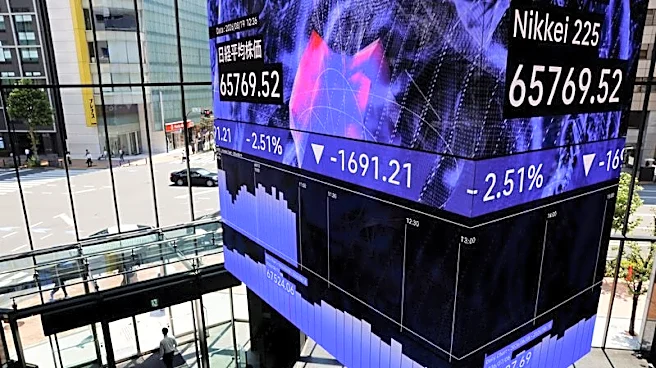
U.S. stock futures have steadied after a challenging start to the week, as investors grapple with rising oil prices and increased expectations for a Federal Reserve interest rate hike. On Monday, the Dow fell 0.7%, while the S&P 500 and Nasdaq Composite
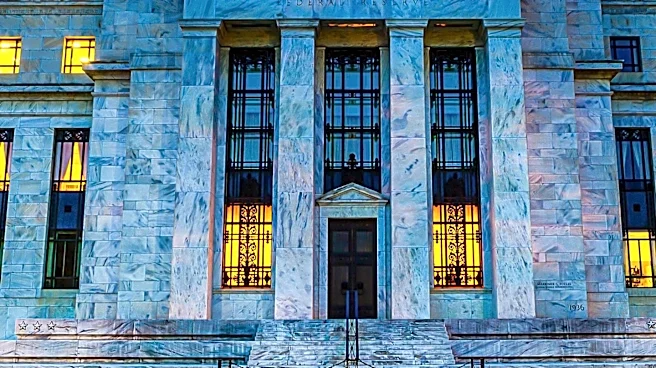
declined 0.33% and 0.12%, respectively. This market downturn was largely driven by rallying oil prices, which were triggered by renewed conflict in the Middle East. Higher energy costs have fueled inflation concerns, strengthening the likelihood of a Federal Reserve rate hike in September, which in turn has sent Treasury yields higher. Nine out of the eleven S&P sectors experienced declines, with communication services, utilities, and industrials leading the losses. Wall Street is now entering what is historically a challenging month for stocks, following modest gains in August.
Why It's Important?
The current market conditions, characterized by steady U.S. stock futures amidst rising oil prices and anticipated Federal Reserve actions, are critical for the U.S. economy. The surge in oil prices directly impacts inflation, increasing costs for consumers and businesses, which can lead to reduced purchasing power and slower economic growth. The strengthened expectation of a Federal Reserve interest rate hike in September is a significant development, as higher rates can increase borrowing costs for companies and individuals, potentially cooling down economic activity and impacting corporate earnings. This scenario creates a challenging environment for investors, as evidenced by the broad-based declines across S&P sectors. The historical tendency for September to be a difficult month for stocks, combined with current economic pressures, suggests a period of heightened volatility and uncertainty for the U.S. financial markets.
What's Next?
Investors will be closely monitoring several key economic indicators this week. On Tuesday, attention will turn to the latest manufacturing and services activity data, which will provide insights into the health of these crucial sectors. The most anticipated release will be the August jobs report on Friday, as it will offer a comprehensive view of the U.S. labor market and significantly influence the Federal Reserve's decision-making regarding interest rates. Any signs of persistent inflation or a robust job market could solidify expectations for a September rate hike. Conversely, weaker-than-expected data might temper these expectations. The Federal Reserve's communications and any further developments in the Middle East will also be critical in shaping market sentiment and guiding investment strategies in the coming weeks.
Beyond the Headlines
The interplay between geopolitical events, commodity prices, and monetary policy highlighted by the current market situation reveals deeper economic vulnerabilities. The reliance on global oil supplies means that conflicts in distant regions can have immediate and tangible effects on the U.S. economy, particularly through inflation. The Federal Reserve's dilemma of balancing inflation control with economic growth is a recurring theme, and its decisions have profound implications for wealth distribution, investment, and employment across the nation. The current environment also underscores the psychological aspect of market behavior, where expectations of future events, such as rate hikes, can drive significant movements even before official announcements. This complex web of factors suggests that navigating the coming months will require careful consideration from policymakers, businesses, and individual investors alike.