



What's Happening?
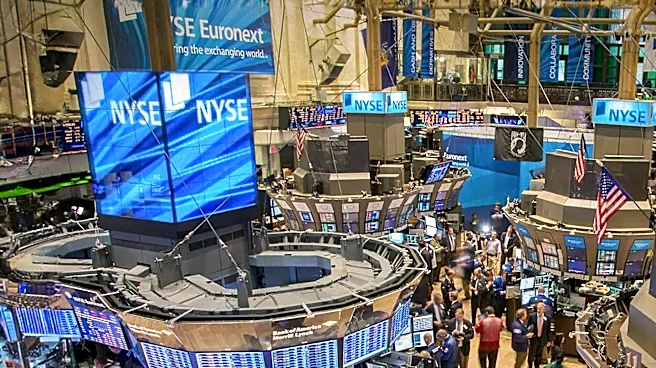
The RH Tactical Rotation ETF (RHRX), operating under the Starboard Investment Trust and managed by Cavalier Investments, LLC (Adaptive ETFs brand), employs an actively managed 'fund-of-funds' approach. Launched on September 20, 2012, and trading on the NYSE
Arca, RHRX aims for capital appreciation by investing primarily in other ETFs rather than individual securities. The fund does not track a single benchmark index but instead rotates among equity ETFs based on the business cycle, momentum, and volatility. Its portfolio is concentrated, typically holding five to nine underlying positions, which have included broad-market funds like the SPDR S&P 500 ETF Trust (SPY) and the Vanguard Morningstar Value ETF (VTV), as well as sector-focused funds such as the Financial Select Sector SPDR Fund (XLF) and the iShares Semiconductor ETF (SOXX). A small portion of its assets is usually held in cash or cash equivalents. The fund's expense ratio is approximately 1.36% to 1.38%, reflecting its actively managed, tactically traded strategy, and its assets under management (AUM) generally range in the tens of millions of dollars.
Why It's Important?
RHRX's active management and sector rotation strategy offer investors a distinct approach compared to passive index funds. This method attempts to capitalize on changing economic phases by shifting capital among ETFs, potentially reducing exposure to underperforming sectors and increasing allocation to those showing strength. This can be particularly appealing to investors seeking a managed way to navigate dynamic market conditions without directly selecting individual stocks. The fund's structure also provides diversification benefits, as each underlying ETF holds a basket of securities across multiple companies. By rotating among sector and style ETFs, RHRX offers a single vehicle for broad U.S. equity sector exposure that adjusts over time. Its focus on large-cap, high-liquidity ETFs aims to maintain a relatively liquid and transparent portfolio, which can be a significant advantage for investors concerned about trading costs and liquidity in more complex alternative strategies.
What's Next?
The future performance of RHRX will largely depend on the skill and timing of its portfolio managers, as tactical shifts can either effectively anticipate market turns or lag, potentially leading to underperformance compared to simpler index funds. Investors will continue to monitor the fund's ability to adapt its sector allocations to prevailing economic environments and market momentum. Given its concentrated portfolio, the impact of downturns in favored sectors will be a critical factor in its returns. The expense ratio of 1.36% to 1.38% will remain a key consideration for investors, as higher fees can erode long-term returns. The fund's relatively small AUM and trading volume may also continue to result in wider bid-ask spreads, which could affect trading costs and liquidity for investors. Ongoing evaluations of its performance against benchmarks like the Morningstar Moderate Aggressive Target Risk TR Index and the S&P 500 TR Index will be crucial for assessing its effectiveness.
Beyond the Headlines
The RH Tactical Rotation ETF exemplifies a broader trend in the investment landscape towards actively managed ETFs that seek to outperform traditional passive index funds through strategic asset allocation. This approach highlights the ongoing debate between active and passive investment strategies, particularly in volatile or rapidly changing market conditions. While active management offers the potential for higher returns by adapting to market cycles, it also introduces manager-dependent risk and typically higher expense ratios. The fund's 'fund-of-funds' structure also points to the increasing complexity and layering of investment products available to retail and institutional investors. The success or challenges faced by RHRX could influence the development and adoption of similar tactical rotation strategies in the ETF market, potentially shaping how investors approach diversification and risk management in their portfolios. It also underscores the importance of understanding the underlying methodologies and costs associated with such specialized investment vehicles.