







What's Happening?
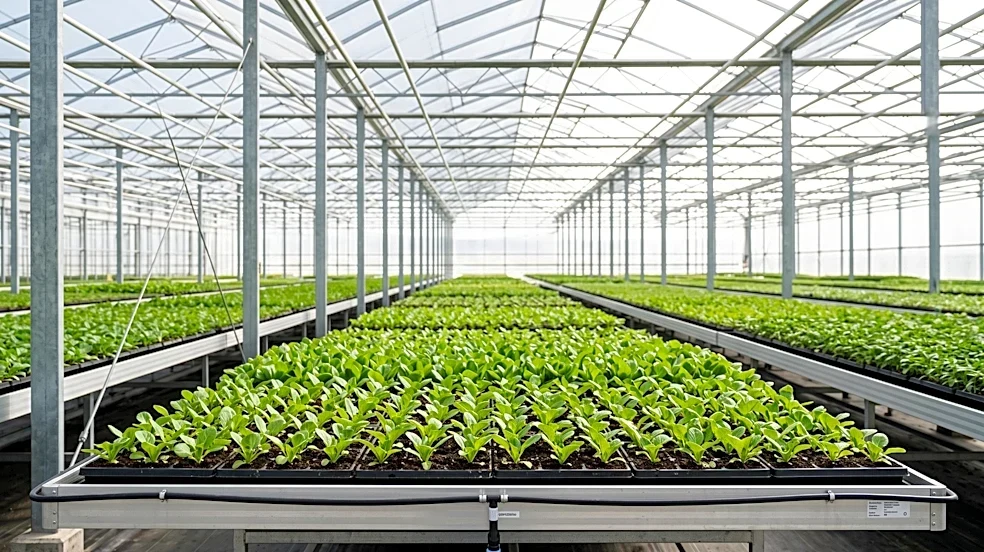
Autonomous harvesting technology, powered by artificial intelligence (AI) and computer vision, is emerging as a transformative solution for greenhouse farming. This technology aims to address labor challenges, improve operational efficiency, maintain
crop quality, and support more predictable production schedules. Companies like eternal.ag are integrating their autonomous harvesting solutions with collaborative robots, such as Universal Robots UR5e, to perform delicate harvesting operations in greenhouse environments. The system uses AI, computer vision, and robotic control to precisely identify and harvest crops, while also protecting plant health and maintaining produce quality. A key aspect of this development is a simulation-first approach, allowing engineers to train, test, and validate robotic movements virtually, significantly reducing development time from months to weeks before physical deployment. This innovation is particularly relevant as controlled-environment agriculture gains traction in response to climate variability and rising input costs.
Why It's Important?
The introduction of AI-powered harvesting robots is highly significant for the U.S. agricultural sector, especially for greenhouse operations. Labor shortages have been a persistent challenge for farmers, and these autonomous systems offer a viable solution by automating repetitive manual tasks. This can lead to increased productivity, reduced labor costs, and more consistent crop yields, which are crucial for meeting consumer demand for fresh produce. The ability to maintain crop quality through precise robotic handling also enhances market value. Furthermore, the simulation-first development approach accelerates the deployment of these technologies, allowing for quicker adaptation to diverse crop varieties and greenhouse layouts. This innovation positions U.S. greenhouse farming to become more resilient, efficient, and competitive, potentially influencing food security and the economic viability of controlled-environment agriculture nationwide.
What's Next?
The adoption of AI-powered harvesting robots in greenhouse farming is expected to expand, with continued integration of advanced AI, computer vision, and collaborative robotics. The simulation-first development approach will likely become a standard practice, further accelerating the refinement and deployment of these systems. Future developments will focus on making the technology more affordable, easier to maintain, and adaptable to a wider range of crops and greenhouse conditions. While these robots will automate many tasks, human labor will likely shift towards roles focused on crop monitoring, plant health, quality control, and overall farm management. The long-term impact will depend on factors such as the cost of robotic equipment, access to reliable infrastructure, and the availability of technical skills for maintenance and operation. This technological evolution aims to create smarter and more efficient agricultural practices, enhancing productivity and competitiveness in both domestic and export markets.
Beyond the Headlines
The integration of AI harvesting robots into greenhouse farming carries deeper implications for the agricultural landscape. Ethically, it prompts discussions about the future of human labor in agriculture, particularly for seasonal workers who often perform these manual tasks. This technological shift necessitates proactive strategies for workforce retraining and the creation of new, higher-skilled jobs in robot operation, maintenance, and data analysis. Environmentally, controlled-environment agriculture, enhanced by robotics, can reduce resource consumption (water, land) and minimize pesticide use, contributing to more sustainable food production. However, the energy demands of advanced robotics and AI systems also need careful consideration. Culturally, it represents a modernization of farming, potentially attracting a new generation of tech-savvy individuals to agricultural careers and reshaping public perception of the industry. The long-term success will hinge on balancing technological advancement with social responsibility and environmental stewardship.