


What's Happening?
Carlie Irsay-Gordon, owner of the Indianapolis Colts, issued a clear mandate during the 2026 training camp: "Find a Way." This directive, interpreted as an ultimatum to win, has been followed by significant roster changes as the team has struggled to perform.
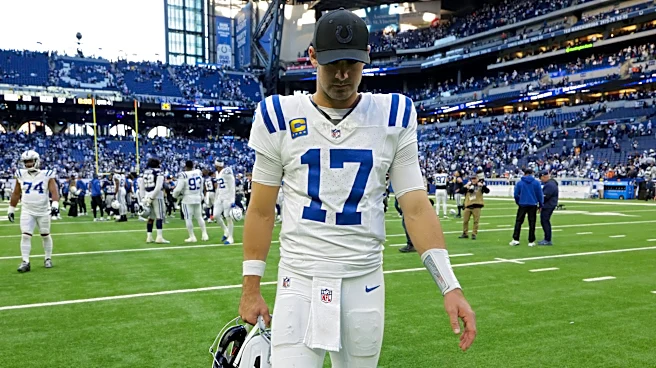
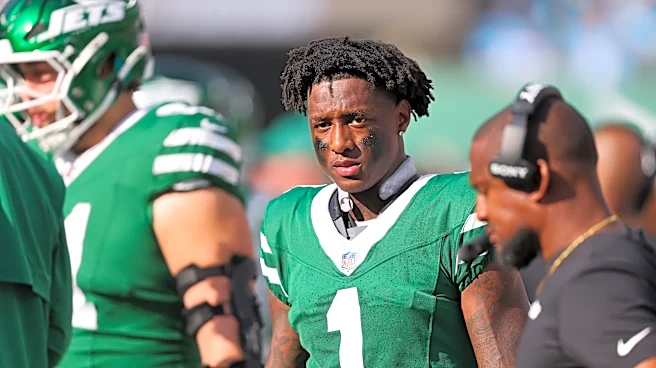
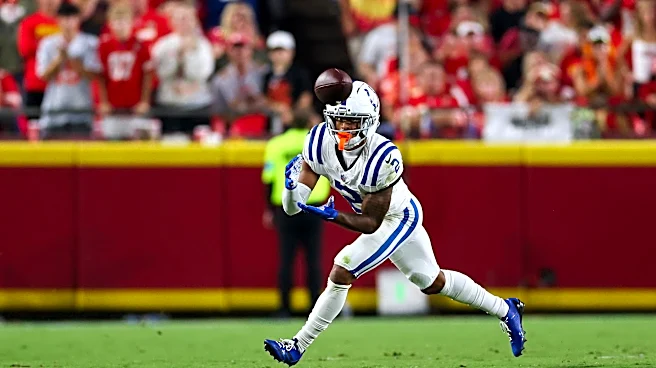
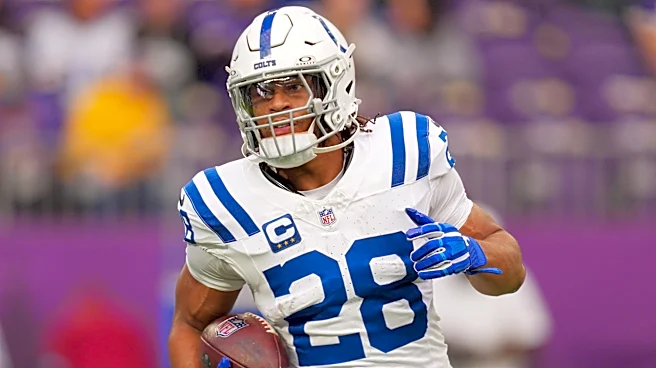
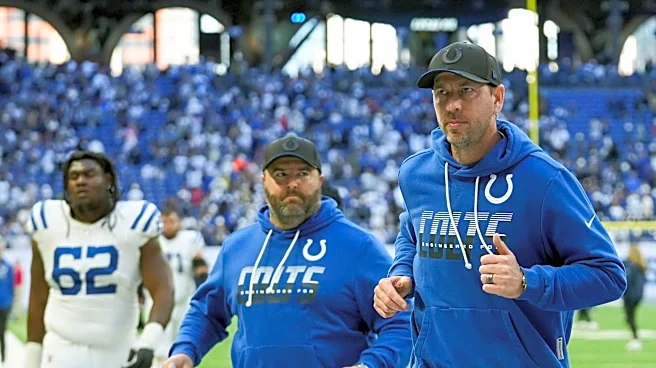
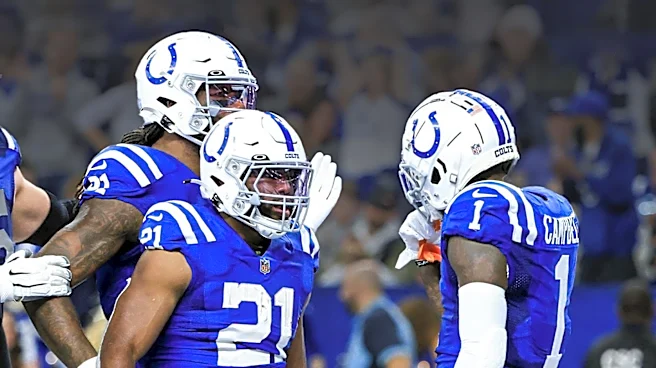
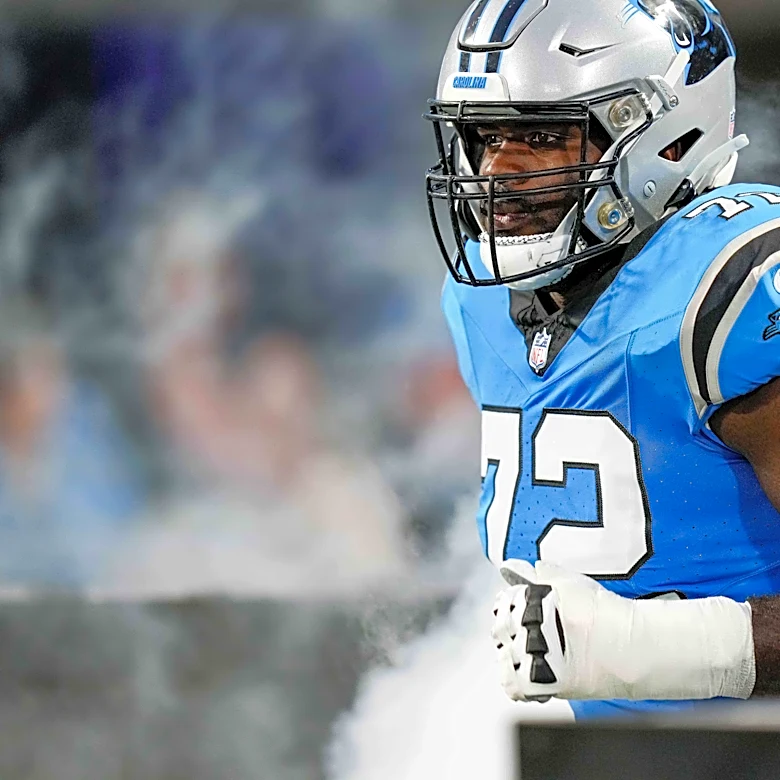
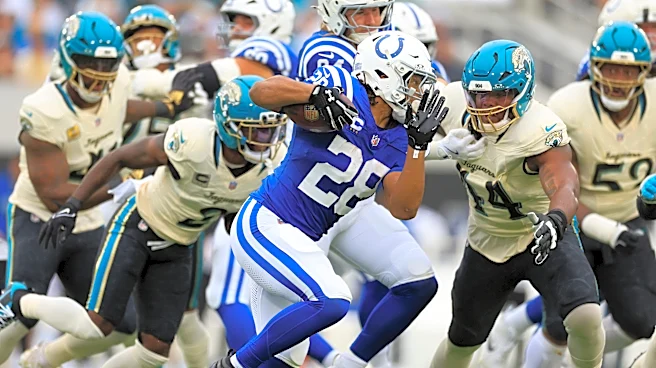
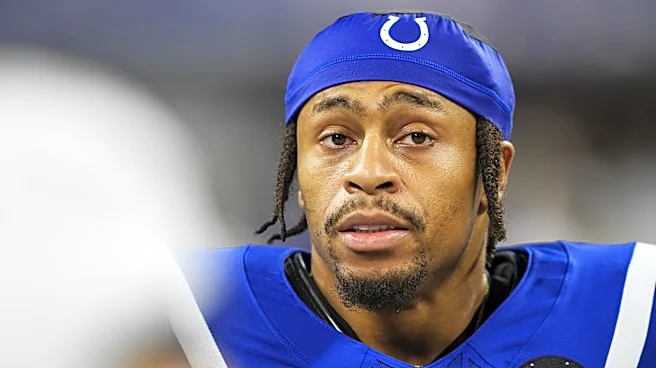
Key players such as DeForest Buckner, Quenton Nelson, Keenan Allen, and Josh Downs have been traded to other teams. Despite these changes, star running back Jonathan Taylor was retained, a decision that has been a point of discussion regarding the team's future strategy. The Colts' current performance has placed them at the bottom, leading to speculation about the future of head coach Shane Steichen and general manager Chris Ballard, who has been with the team for a decade. Irsay-Gordon inherited a franchise that has not produced winning results in a decade, and her actions indicate a strong desire to rebuild and achieve success.
Why It's Important?
This situation highlights the immense pressure on NFL team ownership to deliver winning results, especially for a franchise with a history of underperformance. Carlie Irsay-Gordon's aggressive approach to restructuring the Indianapolis Colts roster, including trading several prominent players, signals a shift in organizational philosophy. While retaining Jonathan Taylor suggests a commitment to a strong running game, the departure of other key players indicates a willingness to dismantle and rebuild. This strategy carries significant risks, as it can alienate fans and create instability, but it also offers the potential for a fresh start and a new direction. The outcome of these moves will be closely watched by other NFL franchises, as it could influence how new ownership groups approach struggling teams. The emphasis on "finding a way to win" underscores the high-stakes nature of professional sports and the direct impact of ownership decisions on team composition and future prospects.
What's Next?
The Indianapolis Colts are expected to continue their rebuilding efforts, with a focus on the upcoming NFL drafts. Following the recent trades, the team has acquired six additional draft picks for the next two seasons, including multiple third, fourth, and fifth-round selections. This influx of draft capital will be crucial for the new general manager, if one is appointed, to select players who fit the team's new vision. The retention of Jonathan Taylor suggests a potential strategy to develop a young quarterback, allowing them to grow with the support of a strong running game. However, the absence of early Day 1 or Day 2 draft picks from the recent trades means the team will need to excel in identifying talent in later rounds. The performance of the team in the immediate future will likely determine the fate of current coaching staff and management, as Irsay-Gordon's mandate for winning remains paramount.
Beyond the Headlines
The aggressive overhaul of the Indianapolis Colts roster under Carlie Irsay-Gordon's leadership reflects a broader trend in professional sports where new ownership often seeks to imprint its vision quickly. This approach, while potentially disruptive, can be seen as a necessary step to break cycles of mediocrity. The ethical implications of trading established players, who are often fan favorites, for future draft capital raise questions about loyalty versus long-term strategic planning. Furthermore, the emphasis on "finding a way" to win, even at the cost of significant roster changes, highlights the intense commercial pressures within the NFL. This situation could also serve as a case study for how a new owner navigates a legacy franchise, balancing the desire for immediate success with the need for sustainable growth and fan engagement. The long-term success or failure of Irsay-Gordon's strategy will undoubtedly influence future ownership decisions across the league.