



What's Happening?
The Arcachon region in France is highlighted as a prime destination for family microadventures, offering a blend of natural beauty and historical intrigue. The Huttopia Arcachon campsite serves as a central point for exploring the area. One notable attraction
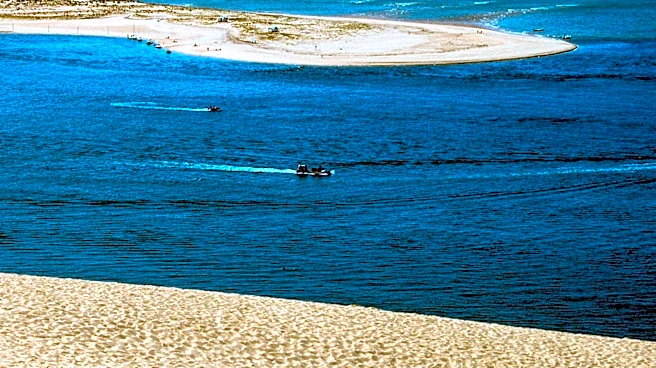
is Plage de l’Horizon, where visitors can experience wild surf and observe the remnants of German bunkers from World War II, which are now covered in graffiti and being reclaimed by the sea and dunes. Another significant landmark is the Dune du Pilat, recognized as Europe’s tallest coastal dune, stretching 2.9 kilometers in length and reaching a height of 101 meters. This dune provides extensive panoramic views of the Bassin, the Banc d’Arguin sandbank, the Atlantic Ocean, the Landes forest, and the Cap Ferret peninsula. Additionally, the nearby areas of La Teste-de-Buch and the Béliasaire pier offer further opportunities for leisure and exploration, including dining options and access to the Petit Train.
Why It's Important?
This focus on microadventures in the Arcachon region underscores a growing trend in tourism towards shorter, more localized, and often nature-centric travel experiences. For the U.S. tourism industry, this trend could influence how travel packages are marketed, potentially shifting focus from extended international trips to more accessible, unique regional explorations. The blend of natural attractions like the Dune du Pilat and historical sites such as the World War II bunkers offers a rich educational and recreational experience, appealing to families seeking both adventure and cultural immersion. The emphasis on eco-friendly accommodations, as seen with Huttopia Arcachon, also reflects an increasing consumer demand for sustainable travel options, which could prompt U.S. hospitality providers to adapt similar models. This approach to travel can also stimulate local economies by encouraging visitors to engage with regional businesses and attractions, providing a blueprint for domestic tourism initiatives in the U.S. that highlight unique local features.
What's Next?
The continued popularity of microadventures and nature-based tourism in regions like Arcachon suggests a potential for increased investment in similar destinations globally, including within the U.S. Local tourism boards and businesses in the Arcachon area may further develop infrastructure and services to cater to this demand, such as enhancing accessibility to natural landmarks and preserving historical sites. There could be a rise in specialized tour operators offering curated microadventure packages that combine outdoor activities with cultural and historical learning. For U.S. travelers, this trend might lead to a greater interest in exploring domestic natural parks, historical trails, and unique regional landscapes, potentially boosting local economies and promoting conservation efforts. The success of models like Huttopia Arcachon could also inspire more eco-conscious accommodation developments, focusing on integrating with the natural environment rather than altering it, thereby setting new standards for sustainable tourism practices.
Beyond the Headlines
The appeal of microadventures in places like Arcachon extends beyond mere tourism, touching upon deeper societal values. The presence of World War II bunkers at Plage de l’Horizon serves as a poignant reminder of historical conflicts, offering a tangible link to the past that can foster reflection and understanding among visitors. This integration of historical context within a recreational setting highlights the potential for travel to be both enjoyable and educational, promoting a deeper appreciation for global history. Furthermore, the emphasis on natural landmarks like the Dune du Pilat encourages environmental awareness and conservation. As these sites are increasingly visited, there's a growing need for sustainable management practices to protect their ecological integrity. The trend also reflects a desire for disconnection from the digital world, with many travelers seeking experiences that immerse them in nature and local culture, fostering a sense of well-being and a return to simpler pleasures. This shift could influence urban planning and public policy, encouraging the development of accessible natural spaces and historical preservation efforts.