




What's Happening?
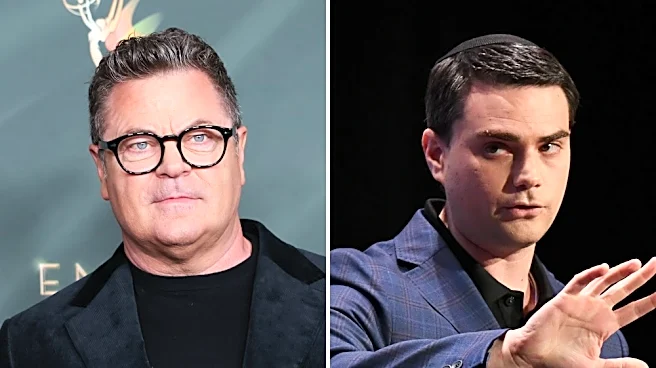
Actor Nick Offerman has publicly responded to conservative commentator Ben Shapiro's criticism of his role in HBO's 'The Last of Us.' During an appearance on the 'Talk Easy with Sam Fragoso' podcast, Offerman viewed a clip of Shapiro discussing the third
episode, 'Long, Long Time,' which features a gay relationship between Offerman's character, Bill, and Frank. Shapiro had previously criticized the episode for its lack of conventional zombie action and its depiction of a gay relationship, also comparing Offerman's character to Ron Swanson from 'Parks and Recreation' while commenting on the character's sexuality and masculinity. Offerman expressed surprise and called Shapiro's commentary 'crazy,' stating he was 'embarrassed for his reading comprehension' and that the remarks contained 'rampant homophobia.' He noted that he had been aware of Shapiro's comments since their original broadcast in 2023 but had not watched the full clip until the podcast.
Why It's Important?
This exchange highlights the ongoing cultural clashes surrounding LGBTQ+ representation in mainstream media and the reactions from conservative commentators. Offerman's direct accusation of 'rampant homophobia' against Shapiro underscores the deep divisions in how such portrayals are perceived and discussed. For the entertainment industry, this incident reflects the challenges and criticisms that can arise when shows feature diverse relationships, particularly from audiences or commentators with differing social views. It also brings attention to the role of public figures like Offerman in defending their work and the artistic choices made in storytelling. The controversy, which Offerman has incorporated into his music performances, demonstrates how such critiques can become part of an artist's public narrative and creative output, further engaging with the broader cultural conversation.
What's Next?
While Offerman has stated he prefers not to engage with online hostility, his public response on a podcast and his use of the controversy in his music suggest that the discussion around LGBTQ+ representation in media and conservative critiques will likely continue. The episode of 'The Last of Us' received critical acclaim, including an Emmy for Offerman, indicating a positive reception within the industry for its storytelling. Future projects featuring diverse characters may continue to face similar scrutiny and generate debate. This incident could also encourage other artists to address criticisms of their work more directly, potentially leading to further public discourse on artistic freedom, representation, and social commentary in entertainment. The ongoing nature of these discussions reflects broader societal shifts and differing viewpoints on cultural values.
Beyond the Headlines
The deeper implications of this exchange extend to the broader cultural landscape, where artistic expression often intersects with social and political ideologies. Offerman's characterization of Shapiro's comments as 'rampant homophobia' points to a fundamental disagreement over the acceptance and normalization of LGBTQ+ relationships in popular culture. This isn't merely a critique of a television episode but a reflection of a larger ideological battle concerning identity, morality, and the role of media in shaping societal norms. The incident also touches upon the concept of 'cancel culture' and the pressure on public figures to align with certain viewpoints, or face backlash. Offerman's decision to address the criticism directly, rather than ignore it, signifies a growing trend among artists to actively participate in these cultural conversations, using their platforms to challenge what they perceive as prejudice or misinterpretation.