






What's Happening?
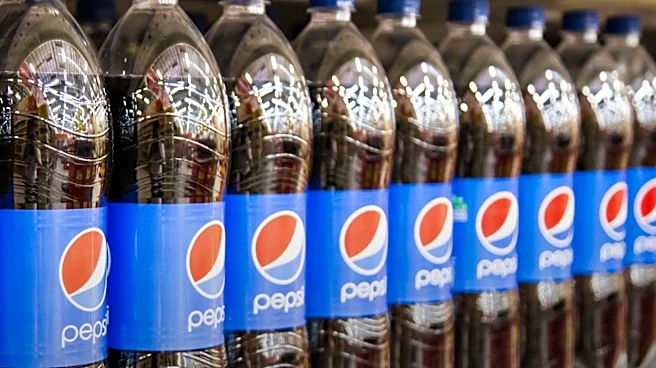
PepsiCo is currently facing performance issues in its North American beverage division, leading to a revised outlook for the company. CEO Ramon Laguarta expressed dissatisfaction with the company's U.S. performance during an October call. The company has
adjusted its core earnings per share (EPS) forecast for fiscal year 2026 to 2.5%-3.5%, down from an earlier projection of 5%-7%. This revision is attributed to weakness in North American beverages and rising input costs, which are offsetting stronger international performance. In response to these developments, Bernstein downgraded PepsiCo's stock from 'Market Perform' to 'Underperform' on November 17, also reducing its price target from $131 to $128. Bernstein anticipates that PepsiCo's future results will fall short of expectations due to declining volumes in both Frito-Lay North America and PepsiCo Beverages North America. Despite these challenges, PepsiCo declared a quarterly dividend of $1.48 on November 18, contributing to a 4% annual increase to $5.92 per share.
Why It's Important?
The challenges faced by PepsiCo in its North American market are significant for the U.S. beverage and snack industry, as PepsiCo is a major player. A slowdown in sales and volume in key segments like Frito-Lay and PepsiCo Beverages could signal broader shifts in consumer preferences, increased competition, or economic pressures affecting household spending on discretionary items. The downgrade by Bernstein, a prominent financial firm, can influence investor sentiment and potentially lead to a decrease in stock value, impacting shareholders and institutional investors. For the broader U.S. economy, a major company like PepsiCo adjusting its earnings forecast due to domestic market weakness could reflect underlying economic conditions such as inflation impacting input costs or a general softening of consumer demand. This situation highlights the importance of strong domestic performance for multinational corporations, even when international markets show strength, as the U.S. market often represents a substantial portion of their revenue and profitability.
What's Next?
PepsiCo's immediate focus will likely be on addressing the performance issues in its North American beverage and snack divisions. This could involve strategic marketing campaigns, product innovation, or adjustments to pricing strategies to stimulate demand and improve volumes. Investors will be closely watching future earnings calls for updates on these initiatives and any signs of recovery in the U.S. market. The company's ability to manage rising input costs will also be critical, potentially leading to further price adjustments or efficiency improvements in its supply chain. The market will also monitor how the Bernstein downgrade impacts PepsiCo's stock performance in the short to medium term, and whether other analysts follow suit. Future dividend announcements will also be scrutinized, as sustained growth in dividends is a key factor for many long-term investors, especially given the recent 4% increase which is below its historical growth rate.
Beyond the Headlines
The situation at PepsiCo extends beyond immediate financial performance, touching upon broader trends in consumer behavior and corporate strategy. The reported weakness in North American beverage volumes could indicate a shift towards healthier alternatives or a general reduction in consumption of sugary drinks, a long-term trend that beverage companies have been grappling with. For Frito-Lay, it might suggest increased competition from private labels or smaller, niche snack brands. This scenario could prompt PepsiCo to accelerate its diversification efforts into healthier product lines or expand its presence in emerging categories. Furthermore, the pressure on input costs highlights the ongoing challenges of global supply chains and inflation, forcing companies to balance profitability with consumer affordability. The company's response to these domestic market pressures could serve as a case study for other large consumer goods companies navigating similar headwinds in the U.S. market, potentially influencing industry-wide strategies for growth and cost management.