




What's Happening?
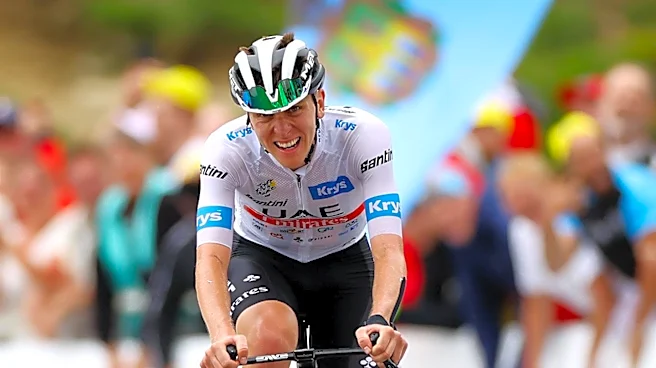
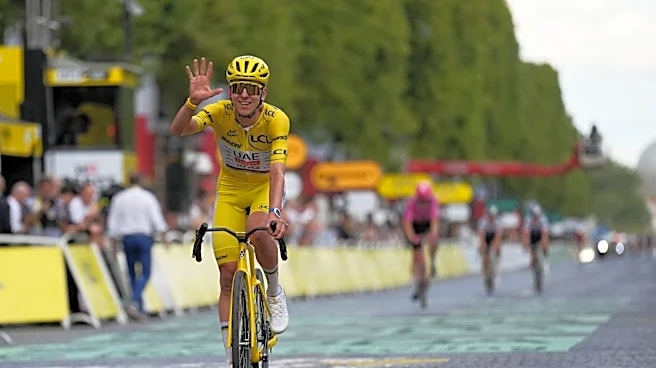
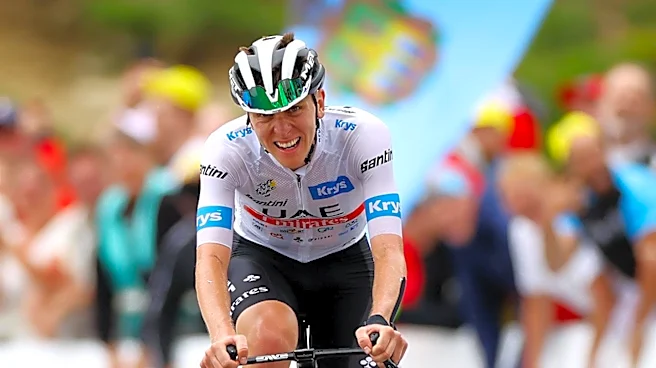
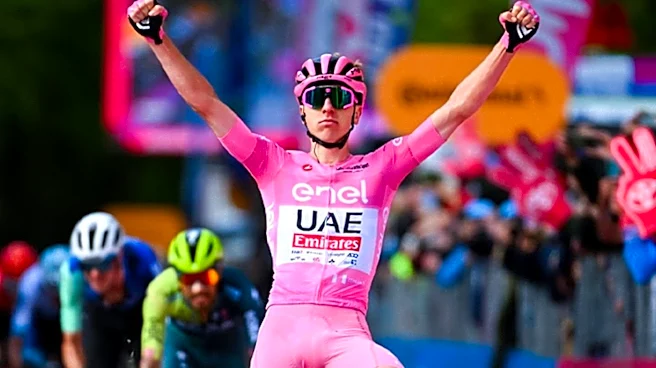
Tadej Pogačar, a Slovenian cyclist, has won his fifth Tour de France title, showcasing exceptional performance with a record-setting climb on Alpe d'Huez. Scientists have estimated Pogačar's VO2 max, a measure of aerobic capacity, to be near 100 ml/kg/min,
based on his key performances. This places him among the elite in cycling, with a VO2 max significantly higher than average. The study, to be published in the International Journal of Sports Physiology and Performance, underscores the physiological demands of high-level cycling.
Why It's Important?
Pogačar's VO2 max estimation highlights the extraordinary physical capabilities required for elite cycling. VO2 max is a critical indicator of an athlete's endurance and performance potential. Understanding these metrics can inform training regimens and performance strategies for cyclists and coaches. The findings also contribute to sports science by providing insights into the physiological limits of human performance, potentially influencing training methodologies and competitive strategies in endurance sports.
What's Next?
The publication of the study on Pogačar's VO2 max will likely spark discussions in the sports science community about the factors contributing to elite athletic performance. Coaches and athletes may explore new training techniques to enhance VO2 max and overall endurance. Additionally, the study could inspire further research into the genetic and environmental factors influencing VO2 max, potentially leading to advancements in sports training and performance optimization.