
What's Happening?
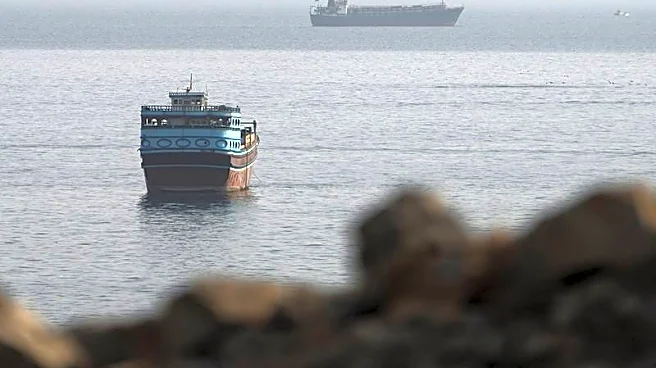
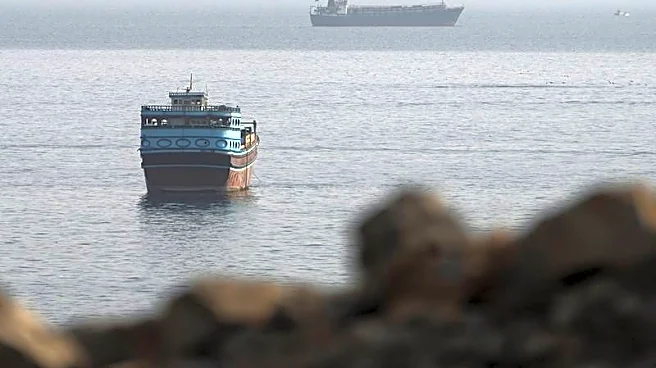
Crude oil prices have surged as uncertainty looms over the reopening of the Strait of Hormuz, a critical chokepoint for global oil shipments. The lack of an agreement between Iran and Oman to reopen the strait
has limited crude supplies from the Middle East, driving up prices. Additionally, an attack on a Saudi oil refinery by Houthi militants has further strained global fuel supplies. President Trump has responded to Iran's demands for compensation related to past conflicts, complicating negotiations. The situation remains tense, with potential for further disruptions in the region.
Why It's Important?
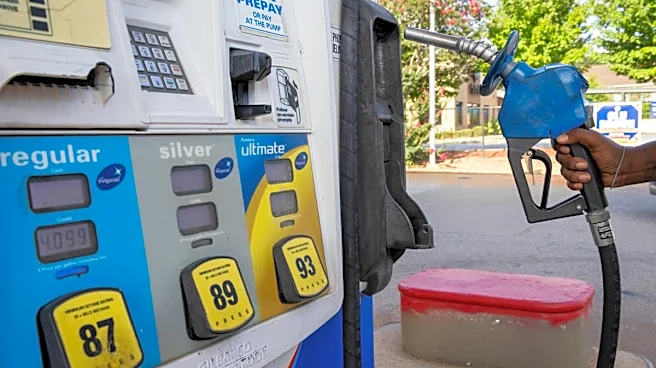
The Strait of Hormuz is a vital passage for oil exports from the Middle East, and its closure or restricted access can significantly impact global oil prices. The current situation highlights the geopolitical risks associated with oil supply routes and the potential for regional conflicts to disrupt global energy markets. Rising oil prices can have widespread economic implications, affecting everything from transportation costs to inflation rates. The U.S. and other countries reliant on Middle Eastern oil may face increased energy costs, influencing economic policies and energy strategies.
What's Next?
Negotiations between Iran and Oman, as well as international diplomatic efforts, will be crucial in determining the future of the Strait of Hormuz. The U.S. may continue to exert economic pressure on Iran, potentially leading to further geopolitical tensions. Energy markets will closely monitor developments, as any resolution or escalation could have immediate effects on oil prices. Additionally, the situation may prompt countries to reassess their energy security strategies and explore alternative supply routes or sources.