









What's Happening?
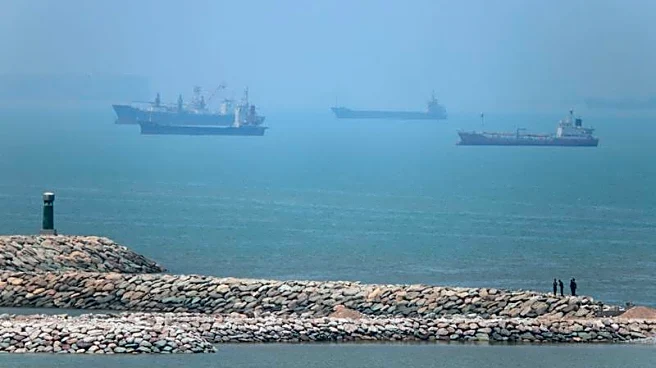
The International Energy Agency (IEA) has significantly revised its 2026 oil demand forecast, projecting a decline of 1.1 million barrels per day, a stark contrast to its previous estimate of growth. This revision comes as the Strait of Hormuz, a critical
oil transit chokepoint, reopens following geopolitical tensions. The strait, which handles about 20% of the world's oil supply, was disrupted, leading to a sharp decline in global oil inventories and a spike in prices. The reopening is expected to stabilize supply, but the IEA warns that full market normalization may not occur until 2027.
Why It's Important?
The Strait of Hormuz is a vital artery for global oil supply, and its disruption has far-reaching implications for the energy market. The IEA's revised forecast highlights the vulnerability of global oil supply chains to geopolitical events. The decline in oil demand reflects the impact of higher prices and reduced availability, which have compressed refiner margins and suppressed consumption. This situation underscores the need for diversified energy sources and resilient supply chains to mitigate the effects of such disruptions.
What's Next?
As the Strait of Hormuz reopens, the focus will be on restoring stable oil flows and rebuilding depleted inventories. The IEA projects a significant rebound in oil supply by 2027, driven by the resumption of Gulf production and non-OPEC growth. However, the recovery will depend on the resolution of operational constraints and geopolitical tensions. The market will closely monitor developments in the region, as well as OPEC+ production decisions, which will influence the pace of supply restoration and price stability.