




What's Happening?
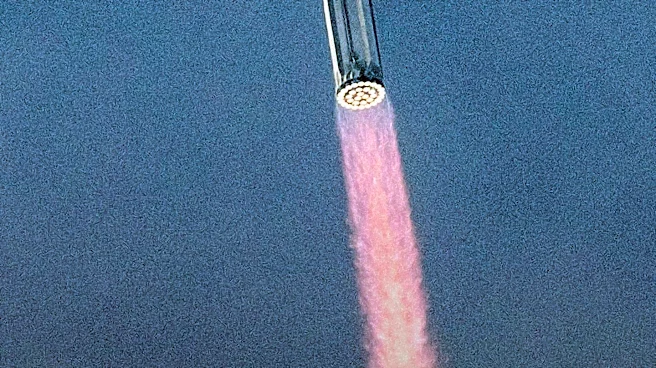
SpaceX's Starship Flight 13 has achieved a milestone by capturing mid-flight images of the rocket using the very Starlink satellites it deployed. The launch took place from SpaceX's Starbase facility in South Texas, deploying 20 next-generation Starlink V3
satellites. These satellites, designed for suborbital deployment, were equipped with cameras to photograph the Starship during its flight. The images, shared by Elon Musk, highlight the integration of SpaceX's two flagship programs, Starship and Starlink, where the satellites not only serve as payload but also as instruments to monitor the rocket's performance.
Why It's Important?
This development signifies a new level of operational synergy between SpaceX's Starship and Starlink programs. By using Starlink satellites to document the Starship's flight, SpaceX is enhancing its data collection capabilities, which is crucial for refining the design and functionality of both systems. The ability to capture real-time imagery of the rocket in flight provides valuable insights into the vehicle's performance and structural integrity. This feedback loop between the two programs represents a strategic advantage for SpaceX, potentially accelerating the development of both the Starship and the Starlink network.
What's Next?
SpaceX plans to continue leveraging the Starlink satellites for monitoring and data collection in future Starship flights. The company aims to transition the Starlink V3 satellites from test articles to operational members of the constellation, enhancing global internet coverage. As SpaceX refines the Starship design, it will focus on increasing the frequency of launches to meet the growing demand for satellite deployment and space exploration missions. The success of this mission also sets the stage for future collaborations with NASA and other space agencies.