






What's Happening?
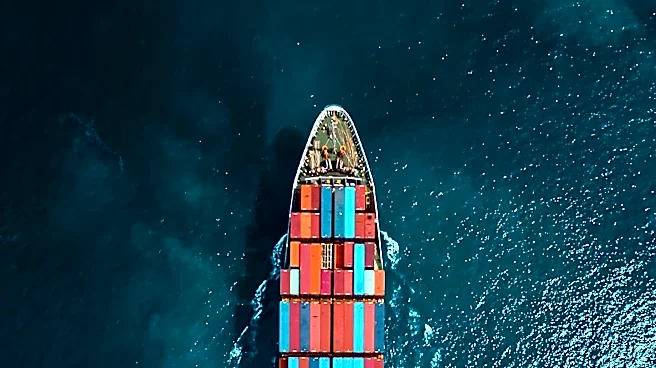
Heerema Marine Contractors has successfully reduced the transit time of its semi-submersible crane vessel, Sleipnir, by 2.5 days across the North Atlantic. This achievement was made possible through a voyage optimization pilot conducted in collaboration
with Amphitrite, a French ocean intelligence company. The pilot involved the use of a data-driven platform that optimized the vessel's route by considering weather, wave, and ocean current conditions. As a result, the vessel's sailing distance was reduced by 240 nautical miles, and carbon dioxide emissions were lowered by up to 18%. The optimization allowed Sleipnir to maintain higher average speeds without increasing fuel consumption, demonstrating the potential for significant efficiency improvements in maritime operations.
Why It's Important?
This development is significant as it highlights the potential for technological advancements to enhance maritime efficiency and reduce environmental impact. By optimizing routes based on real-time ocean intelligence, companies like Heerema can significantly cut down on fuel consumption and emissions, contributing to global decarbonization efforts. This approach not only benefits the environment but also offers economic advantages by reducing operational costs and transit times. The success of this pilot could encourage other maritime operators to adopt similar technologies, potentially leading to widespread improvements in the industry.
What's Next?
Following the successful pilot, Heerema plans to integrate Amphitrite's Ocean Bulletin platform into its fleet operations for ongoing voyage planning and project preparation. This move suggests a commitment to further enhancing fleet efficiency and reducing carbon footprints. As the maritime industry faces increasing pressure to adopt sustainable practices, the adoption of such technologies could become more prevalent. Stakeholders, including environmental groups and regulatory bodies, may closely monitor these developments, potentially influencing future regulations and industry standards.