



What's Happening?
The Metropolitan Museum of Art's 'Costume Art' exhibition, following the 2026 Met Gala's theme, offers a critical examination of the female body's representation in fashion and its historical objectification. In contrast to the narrow beauty standards
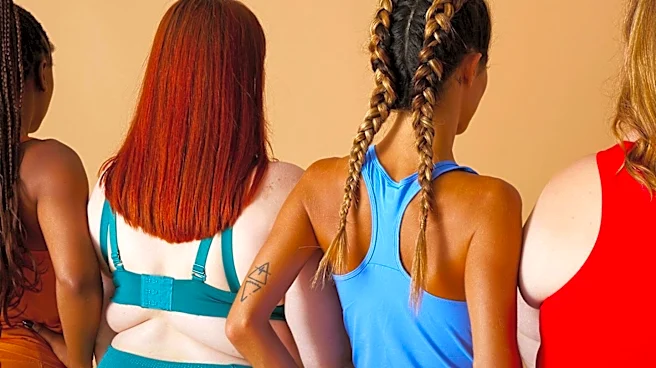
often seen in events like the Victoria's Secret Fashion Show, the exhibition showcases diverse mannequins, including those in wheelchairs, pregnant, and with cerebral palsy. The collection begins and ends with nudity, exploring how the naked body has been influenced by the male gaze and fashion trends throughout history. Notable pieces include Turkish designer Dilara Fındıkoğlu’s 'Earthly Paradise' dress, which uses synthetic hair to cover breasts and vulva, mirroring 18th-century Venus statues, and Australian designer Michaela Stark’s 'Fat Not Fertile' lingerie set, which exposes the stomach and uses lacing to create discomfort, highlighting patriarchal expectations. The exhibition also features pieces representing female autonomy, such as a dress covered in comic strips illustrating '4 Shades of Abortion,' and 'BBL tights' by Swedish designer Ann-Sofie Back, which critique modern cultural obsessions with plastic surgery. The mannequins feature mirrors for faces, reflecting the audience and breaking down barriers between viewer and model.
Why It's Important?
This exhibition is significant for the U.S. cultural landscape as it directly challenges the pervasive and often unrealistic beauty standards propagated by the fashion and media industries. By presenting a diverse range of body types and explicitly addressing themes of objectification and autonomy, the Met is contributing to a broader societal conversation about body positivity and gender equality. The inclusion of pieces that critique patriarchal expectations and validate women's experiences, such as those related to abortion, elevates fashion beyond mere aesthetics to a platform for social commentary and empowerment. The use of mirrors for mannequin faces is a powerful artistic choice that forces self-reflection, encouraging visitors to confront their own perceptions and biases regarding the female form. This approach can foster greater empathy and understanding, potentially influencing how fashion is consumed and created in the U.S., moving towards a more inclusive and representative industry. It also highlights the role of art institutions in driving social change and critical discourse.
What's Next?
The 'Costume Art' exhibition is on view at the Metropolitan Museum of Art through January 10, 2027. Its presence is likely to continue sparking discussions within the fashion industry, academic circles, and the general public regarding body image, gender representation, and the ethical responsibilities of designers and institutions. The exhibition's critical stance on traditional beauty standards may encourage more designers and brands to embrace diversity and challenge conventional norms in their collections and campaigns. Educational institutions and art programs might draw inspiration from the exhibition's themes, integrating discussions on fashion's social and political dimensions into their curricula. Furthermore, the exhibition could influence future curatorial practices in other museums, leading to more thought-provoking and socially conscious displays of fashion and art. The ongoing dialogue initiated by this exhibition could contribute to a sustained movement towards greater inclusivity and authenticity in the U.S. fashion and art scenes.
Beyond the Headlines
Beyond its immediate impact, the 'Costume Art' exhibition delves into the long-standing ethical and cultural dimensions of fashion. It implicitly questions the power dynamics embedded in design and consumption, particularly how clothing can both constrain and liberate. The exhibition's focus on nudity and the male gaze highlights the historical commodification of the female body, prompting a re-evaluation of how societal values are reflected and reinforced through sartorial choices. The use of diverse mannequins is not just about representation but about dismantling the idealized, often unattainable, body image that has dominated fashion for decades, contributing to mental health issues and body dysmorphia. This shift signifies a deeper cultural reckoning with authenticity and self-acceptance. The exhibition also underscores the role of art as a catalyst for social change, demonstrating how fashion, often perceived as superficial, can be a profound medium for political critique and personal empowerment. It encourages a more critical engagement with what we wear and why, fostering a more conscious and ethical approach to fashion in everyday life.