





What's Happening?
Frieze Abu Dhabi's 'Global Futures' section, curated by Tarini Malik, is set to feature solo presentations by artists from diverse artistic and cultural backgrounds. This section aims to connect exhibiting artists by reflecting on the 'turbulence and violence
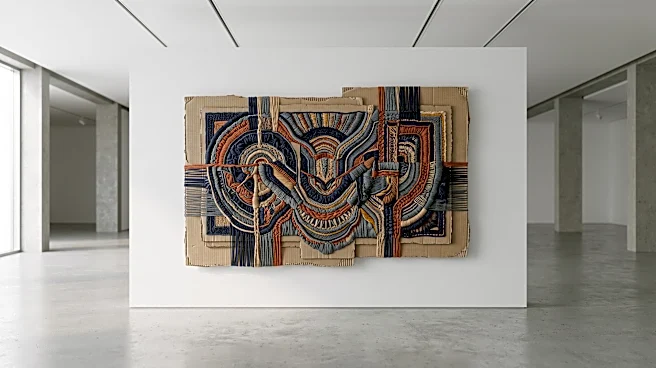
of our times' while acknowledging the specificity of their origins and narratives. The exhibition will showcase works that preserve memory and lived experience, presented as unique systems of knowledge. Examples include Kuwaiti artist Ala Younis's 'Climate Conditions' series, which uses mosaics to document overlooked buildings in Abu Dhabi, and Mexican artist Tania Candiani's 'Root Systems,' exploring plant root networks through embroidery. Palestinian artist Mohammed Joha will present 'No Shelter,' using layered textiles and cardboard to address displacement and the devastation of Gaza. Other artists, such as Arshi Irshad Ahmadzai from India and Godfried Donkor from Ghana, will also contribute works that delve into themes of eternity, cultural exchange, and post-conflict narratives, including Lebanese artist Seta Manoukian's depictions of life during the Lebanese Civil War.
Why It's Important?
The 'Global Futures' section at Frieze Abu Dhabi offers a significant platform for contemporary artists to engage with pressing global issues, providing a lens through which U.S. audiences and the art world can understand diverse perspectives on conflict, displacement, ecology, and cultural identity. By showcasing artists from various backgrounds, the exhibition fosters a broader dialogue about shared human experiences in a rapidly changing world. For the U.S. art market and cultural institutions, this curated section can introduce new artists and artistic movements, potentially influencing future acquisitions, exhibitions, and academic discourse. The themes explored, such as the impact of conflict and environmental change, resonate with ongoing discussions in the U.S. about social justice, global interconnectedness, and the role of art in addressing societal challenges. The exhibition's focus on preserving memory and lived experience through art also highlights the importance of cultural heritage and individual narratives in a globalized context.
What's Next?
The 'Global Futures' section is expected to generate significant discussion within the international art community, potentially leading to increased recognition and opportunities for the featured artists. The themes and artistic approaches presented at Frieze Abu Dhabi could influence future curatorial practices and art market trends globally, including in the U.S. Art institutions, collectors, and critics will likely analyze the exhibition's contributions to contemporary art, particularly its engagement with socio-political issues. The dialogue initiated by these works may encourage further exploration of similar themes in U.S. galleries and museums, fostering a deeper understanding of global challenges through artistic expression. The exhibition's emphasis on connecting disparate works and artists suggests a growing trend towards interdisciplinary and cross-cultural artistic collaborations.
Beyond the Headlines
Beyond its immediate impact on the art market, the 'Global Futures' section delves into the profound ways art can serve as a record of human experience and a catalyst for empathy. The artists' engagement with themes like displacement, environmental change, and conflict transcends geographical boundaries, offering universal insights into the human condition. This approach challenges viewers to confront difficult realities and consider alternative perspectives, fostering a more nuanced understanding of global events. The use of diverse mediums and cultural references also highlights the richness of artistic expression and the power of art to communicate complex ideas where traditional narratives might fall short. The exhibition implicitly underscores the role of art in shaping collective memory and influencing societal values, prompting reflection on how these narratives are constructed and consumed in a globalized world.