




What's Happening?
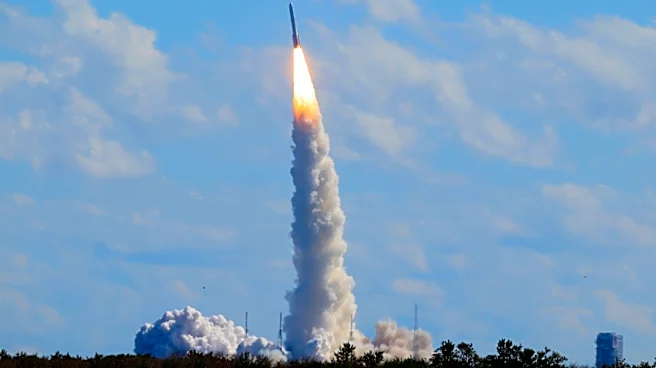
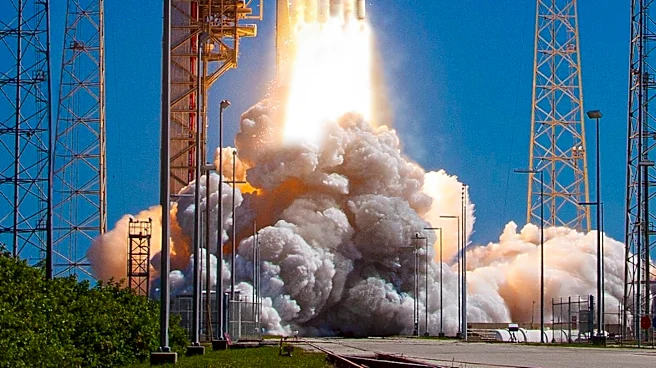
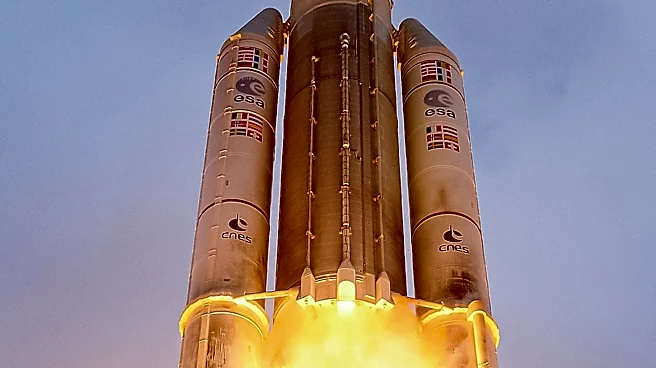
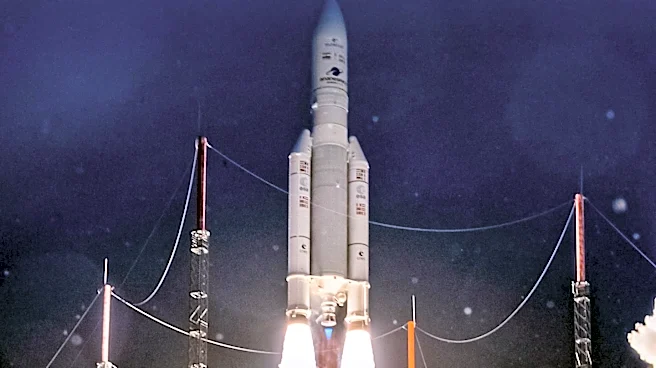
Amazon Leo, formerly known as Project Kuiper, successfully launched 36 satellites into orbit on November 24, 2026. The mission, designated LE-04, utilized an Ariane 6 rocket in its four-booster configuration, lifting off from Europe’s Spaceport in Kourou,
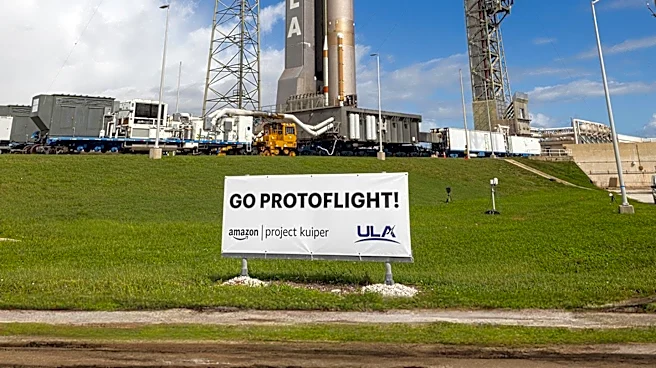
French Guiana. This marks the fourth Amazon Leo flight on an Ariane 6 in 2026, indicating a consistent launch rhythm for the program. The successful deployment of these satellites is a significant step for Amazon's initiative to establish a constellation of over 3,200 low Earth orbit satellites aimed at providing global broadband connectivity. This launch follows a previous setback where a United Launch Alliance Vulcan mission resulted in the loss of 40 Amazon satellites, making this successful deployment particularly crucial for the program's momentum and credibility. Amazon's official materials now refer to the network as Amazon Leo, moving away from the Project Kuiper designation.
Why It's Important?
The successful deployment of 36 Amazon Leo satellites is important for several reasons. For Amazon, it reinforces the viability and progress of its ambitious global broadband initiative, which seeks to compete in the rapidly expanding satellite internet market. This successful launch, especially after a recent failure with a different provider, demonstrates Amazon's multi-vendor launch strategy is effectively mitigating risks and maintaining deployment cadence. For the broader satellite internet industry, Amazon Leo's continued development signifies increased competition, which could drive innovation and potentially lower costs for consumers seeking high-speed, low-latency internet access in underserved areas. The reliance on a European rocket like Ariane 6 by a major U.S. company also highlights the global nature of space launch capabilities and the strategic importance of diverse launch providers for large-scale satellite constellations. This development impacts telecommunications, aerospace, and remote connectivity sectors, potentially expanding internet access globally.
What's Next?
Following this successful launch, Amazon Leo is expected to continue its aggressive deployment schedule to build out its constellation of over 3,200 satellites. Future missions will likely involve its other contracted launch providers, including Blue Origin, SpaceX, and United Launch Alliance. The return to flight for United Launch Alliance's Vulcan rocket, especially for an Amazon mission, will be a closely watched event given the previous loss of 40 satellites. Amazon is also anticipated to provide a clearer, official count of its operational satellites in orbit, addressing current discrepancies in reported figures. As more satellites are deployed, the focus will shift towards the commencement of commercial service, though a specific date has not yet been announced. The pace of deployment will largely depend on the availability and reliability of launch vehicles from its diverse set of providers, as launch capacity remains a critical bottleneck for large constellations.
Beyond the Headlines
The ongoing deployment of Amazon Leo satellites, alongside other mega-constellations, raises deeper implications for orbital mechanics, space traffic management, and international cooperation in space. The sheer number of satellites planned by Amazon and its competitors contributes to an increasingly crowded low Earth orbit, necessitating robust regulatory frameworks and technological solutions to prevent collisions and manage space debris. Furthermore, the global reach of these broadband networks could have significant geopolitical implications, influencing digital sovereignty and access to information in various regions. The competition among major tech companies to provide global internet access also highlights a broader trend of private sector entities playing an increasingly dominant role in space infrastructure, potentially reshaping the future of global communication and digital inclusion. Ethical considerations regarding equitable access, data privacy, and the environmental impact of frequent rocket launches will also become more prominent as these constellations expand.