


What's Happening?
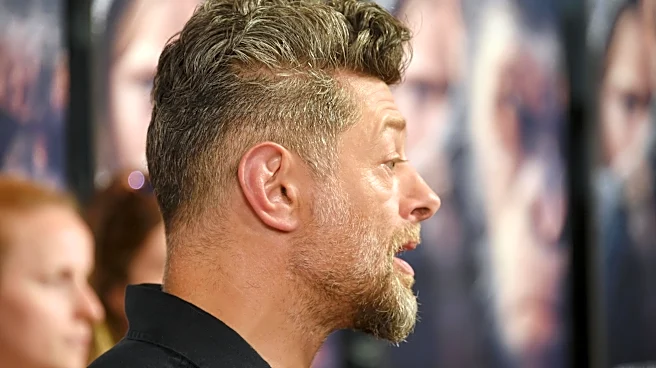
Andy Serkis, known for his portrayal of Gollum in 'The Lord of the Rings' and 'The Hobbit' trilogies, recently disclosed that he experienced a falling out with co-stars Elijah Wood and Sean Astin during the production of the original 'Lord of the Rings' films.
Serkis explained that the friction arose due to differing approaches to the then-novel motion-capture technology used for his character. While Serkis was fully immersed in his performance, Wood and Astin initially treated the scenes involving his motion-capture suit more like rehearsals, leading to what Serkis described as 'harsh words.' This period was also challenging for Serkis as he felt like an 'outsider' upon joining the cast in New Zealand, as the other actors had already bonded over several months of filming. Despite the initial tension, the actors eventually resolved their differences, leading to a strong working relationship and the critically acclaimed portrayal of Gollum. Serkis emphasized that the cast now considers each other family.
Why It's Important?
This revelation offers insight into the early challenges and innovations of motion-capture technology in filmmaking. Serkis's dedication to his role, even amidst initial misunderstandings with co-stars, was pivotal in establishing motion capture as a legitimate and respected form of performance. His commitment helped pave the way for future advancements and acceptance of performance capture in Hollywood, influencing how complex digital characters are brought to life. The story also highlights the human element behind groundbreaking cinematic achievements, demonstrating that even on highly successful productions, creative and technical differences can lead to interpersonal challenges. The eventual reconciliation underscores the collaborative nature of filmmaking and the importance of mutual understanding in achieving a shared artistic vision. This historical context is particularly relevant as Serkis, Wood, and Ian McKellen are reuniting for the upcoming film 'The Lord of the Rings: The Hunt for Gollum,' showcasing the enduring bonds formed despite past difficulties.
What's Next?
Andy Serkis, Elijah Wood, and Ian McKellen are set to reunite for the upcoming film 'The Lord of the Rings: The Hunt for Gollum,' which is scheduled for release on December 17, 2027. This new film will take place chronologically between the events of 'The Hobbit' and 'The Lord of the Rings,' exploring the period before Frodo and the Fellowship embark on their quest to destroy the One Ring. The reunion of these key cast members, particularly Serkis and Wood, signifies that any past tensions have been fully resolved, and they now share a familial bond. Their return to Middle-earth is anticipated by fans, eager to see how the new narrative unfolds and how the actors will reprise their iconic roles with the benefit of decades of experience and a solidified camaraderie. The project also marks a continued expansion of the 'Lord of the Rings' cinematic universe, promising further exploration of J.R.R. Tolkien's world.
Beyond the Headlines
The initial friction between Andy Serkis and his co-stars during the filming of 'The Lord of the Rings' underscores a broader theme in the evolution of filmmaking: the integration of new technologies and the human adaptation required. Motion capture, in its nascent stages, presented a unique challenge for actors accustomed to traditional methods. Serkis's experience highlights the potential for misunderstanding when performers operate under different paradigms—one fully embodying a digital character through advanced tech, and others interacting with that performance in a more conventional, rehearsal-like manner. This situation reflects the ongoing tension between technological innovation and artistic interpretation in cinema. Ultimately, the success of Gollum's character not only validated Serkis's pioneering performance but also demonstrated how actors and filmmakers can bridge technological gaps to create compelling narratives, setting a precedent for future hybrid performances that blend human acting with digital artistry. It also speaks to the resilience of professional relationships in creative industries, where initial conflicts can evolve into lasting bonds.