







What's Happening?
The global market for probiotics in animal feed is projected to grow significantly, reaching an estimated USD 8.76 billion by 2031, up from USD 5.82 billion in 2026, at a Compound Annual Growth Rate (CAGR) of 8.5%. This growth is primarily driven by the
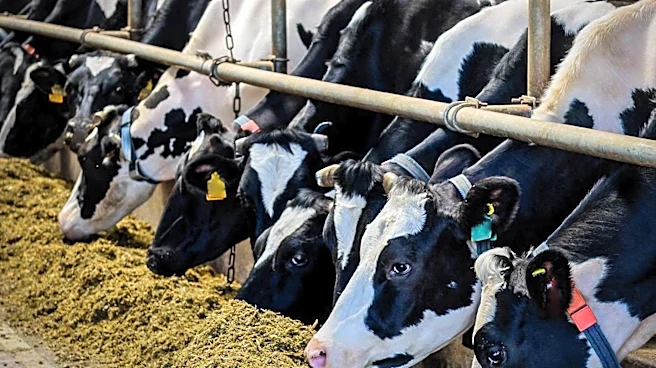
increasing global demand for animal protein, growing concerns regarding antimicrobial resistance, and the rising adoption of alternatives to antibiotic growth promoters in livestock production. Probiotics, which are live beneficial microorganisms, are being increasingly incorporated into animal feed formulations to enhance gut health, improve nutrient absorption, boost immunity, and increase feed conversion efficiency across various livestock, including poultry, swine, ruminants, and aquaculture species. Advances in microbial strain development, fermentation, encapsulation, and heat-stable formulations are contributing to the improved stability and effectiveness of probiotics during feed processing and storage. The Asia Pacific region is expected to register the highest CAGR of 9.7% in this market, with poultry accounting for the largest market share by livestock, and bacteria being the dominant source of probiotics.
Why It's Important?
This market expansion has significant implications for the U.S. agricultural and food industries. The shift towards probiotics in animal feed directly addresses consumer and regulatory pressures to reduce antibiotic use in livestock, which is a major public health concern due to the rise of antibiotic-resistant bacteria. For U.S. farmers and livestock producers, adopting probiotics can lead to healthier animals, improved productivity, and potentially higher profits by reducing disease incidence and enhancing feed efficiency. This also aligns with the growing consumer demand for antibiotic-free meat and dairy products, offering a competitive advantage to producers who embrace these practices. Furthermore, the growth of this market fosters innovation in biotechnology and animal nutrition, creating opportunities for U.S. companies specializing in microbial solutions and feed additives. The increased use of probiotics can contribute to more sustainable and ethical farming practices, benefiting both animal welfare and the broader food supply chain in the United States.
What's Next?
The probiotics in animal feed market is expected to continue its steady growth, with ongoing advancements in biotechnology leading to more effective and species-specific probiotic formulations. Manufacturers will likely focus on developing innovative solutions that can withstand various feed processing and storage conditions, further enhancing product stability and efficacy. The trend towards reducing antibiotic use in livestock is anticipated to persist, driven by both regulatory frameworks and evolving consumer preferences, which will further fuel the demand for probiotic alternatives. Companies in the animal nutrition sector are expected to pursue strategic acquisitions and partnerships to expand their microbial technology capabilities and strengthen their product portfolios. Research and development efforts will also concentrate on identifying new probiotic strains and optimizing existing ones to address specific health challenges and productivity goals across different livestock categories. The Asia Pacific region's projected high growth rate suggests potential for increased international collaboration and market penetration for U.S. companies.
Beyond the Headlines
Beyond the immediate economic and agricultural impacts, the rise of probiotics in animal feed touches upon broader societal and environmental considerations. The reduction of antibiotic use in livestock, facilitated by probiotics, has profound implications for global public health by mitigating the development and spread of antimicrobial resistance, a critical threat identified by organizations worldwide. This shift also reflects a growing societal demand for more natural and sustainable food production systems, influencing consumer trust and purchasing decisions. Environmentally, healthier animals may have a reduced ecological footprint due to improved feed conversion and overall well-being. However, challenges remain, including the high formulation costs of some probiotics, variability in microbial performance, and the need for robust regulatory frameworks to ensure product safety and efficacy. The long-term success of this market will depend on continued scientific innovation, effective communication with producers and consumers, and a commitment to sustainable practices that balance economic viability with public health and environmental stewardship.