






What's Happening?
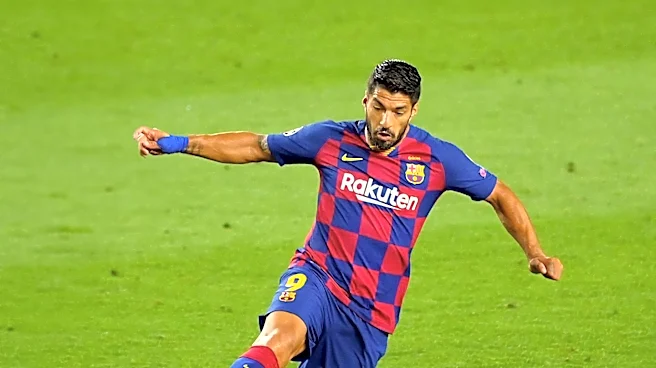
Luis Suárez joined Atlético Madrid in the summer of 2020 after being compelled to leave Barcelona by then-manager Ronald Koeman. Despite the circumstances of his departure from Barcelona, Suárez quickly became a pivotal player for Atlético Madrid. In
his inaugural season with the club, he demonstrated significant scoring prowess, netting 21 league goals. These contributions were instrumental in Atlético Madrid securing the La Liga title. The team's success culminated in a decisive 2-1 victory against Real Valladolid on the final day of the season, where Suárez scored the winning goal, solidifying their championship claim. This move showcased how a veteran striker, acquired for a modest fee of €7 million, could dramatically alter a team's fortunes and lead them to a major domestic title.
Why It's Important?
Suárez's transfer and subsequent performance underscore the strategic importance of veteran players in professional sports, particularly in high-stakes leagues like La Liga. His ability to integrate quickly and deliver critical goals highlights that experience and proven talent can be more impactful than solely investing in younger, unproven prodigies. For Atlético Madrid, this acquisition not only brought a league title but also demonstrated a successful model of leveraging undervalued talent from rival clubs. This scenario can influence future transfer strategies across major sports leagues, encouraging teams to consider the immediate impact of experienced players who might be deemed surplus by other top-tier clubs. The success also provides a blueprint for teams operating with more constrained budgets to compete effectively against wealthier rivals by making astute player acquisitions.
What's Next?
While the immediate impact of Suárez's move has been realized with a league title, the long-term implications for Atlético Madrid involve sustaining this level of success and integrating new talent. The club will likely continue to seek a balance between acquiring established stars and developing younger players to maintain competitiveness in both domestic and international competitions. For Suárez, his continued performance will dictate his future role and contract negotiations, as well as his legacy within the club. The success of this transfer may also encourage other clubs to pursue similar strategies, looking for opportunities to sign experienced players who are no longer central to their previous teams' plans but still possess significant skill and leadership qualities. The ongoing dynamics of player transfers and team building in European football will be influenced by such successful case studies.
Beyond the Headlines
The narrative of Luis Suárez's move from Barcelona to Atlético Madrid and his subsequent success extends beyond mere sporting achievement. It highlights the often-unpredictable nature of player management and team dynamics in elite football. Ronald Koeman's decision to force Suárez out of Barcelona, a move that was widely criticized, ultimately benefited a direct rival and contributed to Barcelona's own struggles in the subsequent season. This situation brings to light the ethical considerations and potential repercussions of managerial decisions regarding star players. It also emphasizes the psychological aspect of sports, where a player, feeling undervalued, can find renewed motivation and perform at an exceptional level in a new environment. This story serves as a reminder that team chemistry and player morale are as crucial as individual talent in achieving collective success, and that sometimes, a change of scenery can unlock a player's full potential.