







What's Happening?
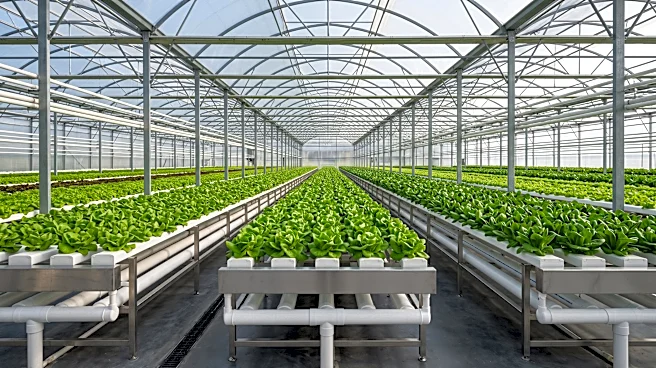
Springworks Farm, a prominent regional producer of greenhouse-grown lettuce, has ceased operations and is selling its extensive Lisbon, Maine headquarters. The 168-acre campus, which includes greenhouses, support buildings, and a farmhouse, will be sold
in a "lender-ordered" auction scheduled for mid-October. Broker Mike Carey of Tranzon Auction Properties announced the sale, highlighting the existing infrastructure as a significant advantage for potential buyers. Springworks Farm, founded in 2014, specialized in aquaponic farming, growing lettuce and fish using a recirculating indoor water system. This method was touted for its efficiency in resource use and its ability to produce greens year-round. The company's customer base included major supermarkets like Hannaford and Whole Foods. Efforts to contact Springworks Farms for more information were unsuccessful, with the company's landline disconnected and no response to email inquiries. Lisbon Economic Development Director Ross Cunningham also declined to comment on the company's status. The Maine Technology Institute, which provided Springworks with a $300,000 grant for expansion six years prior, did not respond to requests for information.
Why It's Important?
The closure and auction of Springworks Farms' headquarters signify a notable shift in the regional agricultural landscape, particularly within the controlled environment agriculture (CEA) sector. The sale of a fully equipped 168-acre aquaponic facility presents a unique opportunity for a new entity to enter or expand within the greenhouse farming industry without the typical startup costs and permitting delays. This could potentially lead to a revitalization of the site under new ownership, maintaining or even increasing local food production. However, the shuttering of Springworks Farms also raises questions about the economic viability and challenges faced by large-scale aquaponic operations, despite their innovative and resource-efficient methods. The impact on the local economy of Lisbon, Maine, and the broader regional food supply chain, especially for customers like Hannaford and Whole Foods, remains to be seen. The situation also highlights the risks associated with agricultural ventures, even those supported by grants and advanced technology.
What's Next?
The immediate next step is the mid-October auction of the Springworks Farms campus. The outcome of this auction will determine the future of the 168-acre property and its advanced greenhouse infrastructure. A successful sale to a new agricultural enterprise could lead to the resumption of food production, potentially under a different business model or with new crops. Conversely, if the property does not attract a suitable buyer, its future use could shift away from agriculture, impacting local employment and the regional food supply. Stakeholders, including local economic development officials and former customers, will likely monitor the auction closely. The situation may also prompt a broader discussion within the agricultural community and among investors about the challenges and opportunities in large-scale aquaponics and controlled environment agriculture, particularly concerning market demand, operational costs, and financial sustainability.
Beyond the Headlines
The closure of Springworks Farms, despite its innovative aquaponic system and significant investment, underscores the inherent complexities and risks in modern agriculture. While aquaponics offers environmental benefits such as reduced water usage and year-round production, scaling such operations to be economically sustainable can be challenging. This event could serve as a case study for agricultural technology startups and investors, highlighting the need for robust business models alongside technological innovation. Furthermore, the reliance of major retailers like Hannaford and Whole Foods on such producers points to the interconnectedness of the food supply chain and the potential ripple effects of a single producer's failure. The situation also brings to light the role of government and institutional support, such as the grant from the Maine Technology Institute, in fostering agricultural innovation and the need to evaluate the long-term impact and success of such investments.