







What's Happening?
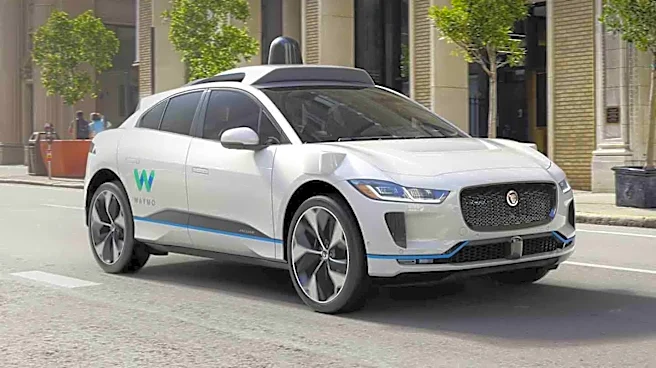
Waymo, an autonomous vehicle company, has secured approval from the California Public Utilities Commission to significantly expand its ride-hailing services across major urban areas in California. This expansion follows earlier approval from the state's
Department of Motor Vehicles. Currently, Waymo operates in specific parts of the San Francisco Peninsula, Santa Clara Valley, and a section of Los Angeles County. The new approval will allow the company to extend its operations to numerous cities across Northern and Southern California. In Northern California, this includes cities in Alameda, Contra Costa, San Francisco, San Mateo, Santa Clara, Marin, Napa, Solano, Sonoma, Sacramento, and Yolo counties. Southern California will see expansion into Los Angeles, Ventura, Orange, San Bernardino, Riverside, and San Diego counties. This development marks a substantial increase in the geographic reach of Waymo's autonomous ride-hailing services within the state.
Why It's Important?
This significant expansion by Waymo is poised to reshape the landscape of urban transportation in California, offering a new mode of mobility to a vast population. For consumers, it could mean increased access to on-demand transportation, potentially reducing reliance on personal vehicles and traditional ride-sharing services. The expansion could also lead to enhanced convenience, especially in areas with limited public transit options. Economically, this move could stimulate job creation in the autonomous vehicle sector, including roles in maintenance, operations, and customer support. However, it also presents challenges to existing transportation industries, such as taxi services and human-driven ride-sharing platforms, which may face increased competition. The broader adoption of autonomous vehicles could also influence urban planning, infrastructure development, and traffic management strategies, potentially leading to reduced traffic congestion and parking demand in the long term. The success of this expansion will be a critical indicator for the future of autonomous vehicle integration into daily life.
What's Next?
Following the regulatory approval, Waymo is expected to progressively roll out its expanded autonomous ride-hailing services across the newly approved cities in California. This will likely involve a phased approach, starting with testing and mapping in new areas before fully launching commercial operations. The company will need to address logistical challenges, including establishing operational hubs, deploying and maintaining a larger fleet of autonomous vehicles, and ensuring robust customer support in these new markets. Local communities and city governments will be closely observing the impact of these services on traffic patterns, public safety, and local economies. There may also be ongoing public discourse and potential regulatory adjustments as the service becomes more widespread. Competitors in the autonomous vehicle space will likely monitor Waymo's expansion closely, potentially influencing their own strategic decisions and timelines for market entry or expansion in California and other states.
Beyond the Headlines
The widespread deployment of Waymo's autonomous ride-hailing service in California carries profound implications beyond immediate transportation benefits. Ethically, it raises questions about the responsibility and accountability in the event of accidents involving autonomous vehicles, and how these systems will interact with human drivers and pedestrians in complex urban environments. Legally, the expansion will likely necessitate further refinement of state and local regulations concerning autonomous vehicle operation, insurance, and liability. Culturally, the increased presence of self-driving cars could gradually shift public perception and acceptance of autonomous technology, potentially normalizing its use in daily life. This development also contributes to the broader technological shift towards smart cities, where interconnected autonomous systems play a larger role in urban infrastructure. The long-term impact could include changes in urban design, with less emphasis on parking and more on pedestrian-friendly spaces, and a potential reduction in vehicle ownership as ride-hailing services become more accessible and efficient.