

What's Happening?
Former NFL defensive lineman Breiden Fehoko has publicly criticized the perceived disparity in how the NFL and its teams handle off-field controversies, specifically contrasting the treatment of Green Bay Packers running back Josh Jacobs with Baltimore
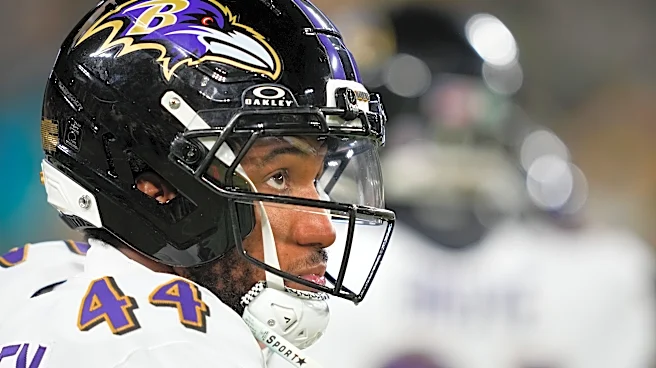
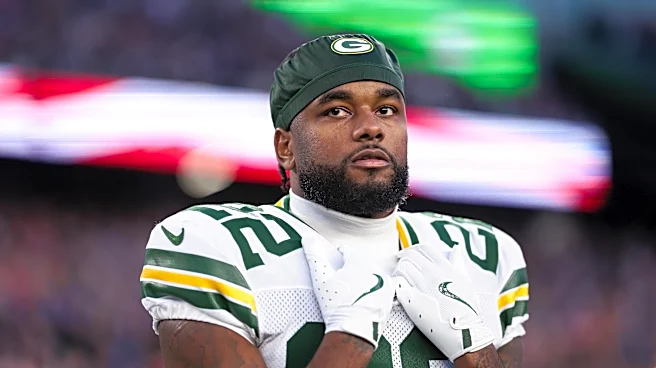
Ravens cornerback Marlon Humphrey. Fehoko's comments, made on November 19, followed Baltimore's decision to deactivate Humphrey for a game due to remarks made on his podcast. Fehoko highlighted that while Humphrey faced immediate team discipline for his comments, Josh Jacobs, who has faced allegations of physical abuse from multiple women and pleaded no contest to misdemeanor battery, remains a starting running back for the Packers. Jacobs missed six games earlier in the season on the Commissioner's Exempt List due to legal troubles, and the NFL's investigation into additional allegations of physical abuse remains open.
Why It's Important?
Breiden Fehoko's criticism brings to light a significant issue within the NFL regarding the consistency and fairness of player discipline, particularly concerning off-field conduct. The perceived difference in how the league and individual teams address various types of controversies—from verbal remarks to serious allegations of physical abuse—can lead to questions about the NFL's commitment to its personal conduct policy. This situation impacts the league's public image and its efforts to maintain credibility and trust among fans and stakeholders. For players, it raises concerns about equitable treatment and the criteria used for imposing penalties. The ongoing NFL investigation into Josh Jacobs, coupled with the public scrutiny, underscores the complex challenges the league faces in balancing player rights, team interests, and the moral imperative to address serious allegations responsibly. This debate contributes to a broader conversation about accountability in professional sports and the standards expected of public figures.
What's Next?
The NFL's investigation into Josh Jacobs regarding allegations of physical abuse remains open, indicating the possibility of further disciplinary action from the league. While Jacobs has already missed six games on the Commissioner's Exempt List, the ongoing nature of the investigation means that additional suspensions or penalties could still be imposed. The public criticism from former players like Breiden Fehoko may continue to pressure the NFL to provide a clear and consistent resolution to such cases. Jacobs' attorneys have disputed the additional allegations, claiming to possess evidence contradicting the claims, which could factor into the investigation's outcome. The Green Bay Packers continue to have Jacobs on their roster, but the unresolved nature of the league's inquiry leaves uncertainty about his long-term status and potential future consequences.
Beyond the Headlines
The controversy surrounding Josh Jacobs and the comparative disciplinary actions within the NFL highlight deeper ethical and cultural implications for professional sports. The public's perception of justice and fairness in how athletes are treated for various offenses is crucial for the league's social license. When there appears to be a discrepancy in consequences for different types of misconduct, it can fuel cynicism and accusations of hypocrisy. This situation forces a re-evaluation of the NFL's internal processes for investigating and adjudicating player conduct, particularly in sensitive areas like domestic violence. It also underscores the power dynamics at play, where team decisions and league policies intersect with public opinion and media scrutiny. Ultimately, how the NFL resolves Jacobs' case and addresses the broader concerns about disciplinary consistency will influence its standing as a responsible institution and its ability to uphold ethical standards for its players.