






What's Happening?
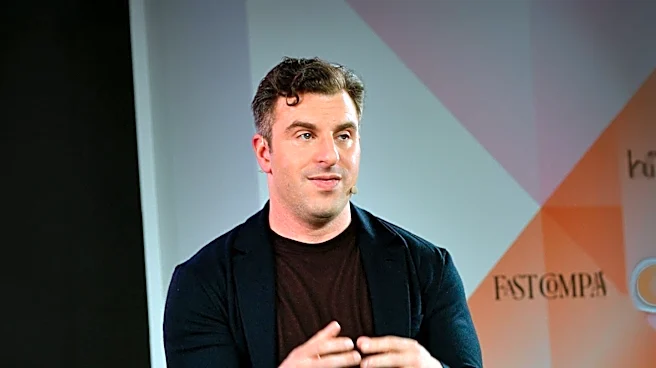
Brendan Foody, CEO of Mercor, and James DeWille of Felicis, are engaged in a discussion regarding the future impact of Artificial Intelligence on the job market and the nature of human expertise. Foody maintains a conventional view, asserting that AI
will ultimately create more jobs in the next decade than it displaces, citing the elasticity of labor demand and the long timeline required to automate physical and inherently human tasks. He highlights that the rapid pace of AI development creates an ideal environment for new founders, as established companies often struggle to keep pace. Conversely, DeWille agrees with Foody that AI will create more jobs than it destroys but introduces a nuanced perspective on a significant social shift. He argues that human expertise, traditionally a source of purpose, may become less central as AI advances. DeWille suggests that the bottleneck for purpose is shifting from expertise to qualities such as imagination, curiosity, agency, trustworthiness, and locality, implying a redefinition of valuable human contributions in an AI-driven world.
Why It's Important?
This debate is crucial for understanding the long-term societal and economic implications of AI in the U.S. If Foody's perspective holds true, the U.S. economy could experience a net gain in employment, albeit with a shift in the types of jobs available. This would necessitate workforce retraining and educational reforms to prepare individuals for new roles that leverage AI rather than being replaced by it. DeWille's argument, however, points to a more profound transformation, suggesting that the very concept of human purpose and value in the workforce might undergo a significant re-evaluation. This could lead to a societal emphasis on uniquely human attributes like creativity, critical thinking, and interpersonal skills, which are harder for AI to replicate. The implications extend to public policy, as lawmakers may need to consider new social safety nets or educational frameworks that support a workforce where traditional expertise is less valued, and human agency and trust become paramount. Businesses will also need to adapt their hiring strategies and organizational structures to align with these evolving definitions of valuable skills.
What's Next?
The ongoing development and integration of AI technologies will continue to shape the U.S. job market and redefine the value of human skills. In the short term, businesses are likely to focus on upskilling their existing workforce to utilize AI tools, while educational institutions may begin to emphasize creativity, problem-solving, and interpersonal skills over rote memorization or specialized technical knowledge that AI can perform. Policy discussions may emerge around universal basic income or other forms of social support if job displacement becomes more pronounced than job creation. Furthermore, the investment landscape, as highlighted by Foody's company Mercor and DeWille's firm Felicis, will likely continue to favor AI startups that address these evolving market needs, whether through creating new job categories or enhancing human capabilities. The debate between job creation and the redefinition of expertise will likely intensify as AI becomes more sophisticated, prompting continuous re-evaluation from economists, policymakers, and business leaders.
Beyond the Headlines
The discussion between Foody and DeWille touches upon deeper philosophical and ethical questions regarding the role of humanity in an increasingly automated world. If expertise becomes less scarce due to AI, society might grapple with a potential crisis of purpose for individuals whose identities are closely tied to their specialized knowledge. This could lead to a re-examination of educational paradigms, moving away from purely vocational training towards fostering intrinsic human qualities. The emphasis on 'agency, trust, and locality' by DeWille suggests a future where human connection and unique, localized experiences become highly valued, potentially counteracting the homogenizing effects of global AI systems. This shift could also influence cultural norms, promoting community-based economies and personalized services that AI cannot fully replicate. The long-term implications could involve a societal renaissance where human creativity and interpersonal skills are celebrated as the ultimate forms of value, leading to new forms of art, social interaction, and community building that are distinctly human.