
What's Happening?
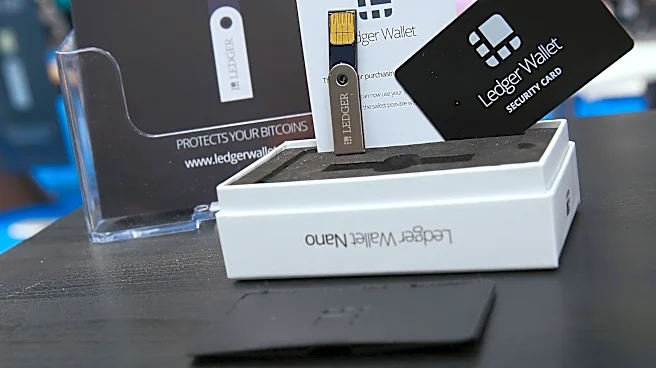
Ethereum co-founder Vitalik Buterin is calling for greater transparency in chip designs, specifically for hardware wallets used in cryptocurrency. In a November 26 essay, Buterin argued that current hardware security
measures, which often rely on proprietary and opaque chip designs, are insufficient. He introduced the concept of 'Not your silicon, not your keys,' emphasizing that even with open-source software, a compromised chip could expose private keys or seed phrases. Buterin highlighted supply-chain risks, such as malicious eSIM implants or the replacement of legitimate chips with altered versions designed to bypass software checks. He suggests that meaningful verification requires openness down to the GDS level, which details the physical geometry of a chip's components, and access to Process Design Kits (PDKs) containing manufacturing-specific information. This level of transparency would allow independent researchers, auditors, journalists, and civil society groups to verify manufacturers' claims using specialized equipment.
Why It's Important?
Buterin's proposal addresses a critical vulnerability in the rapidly evolving cryptocurrency landscape: the security of hardware wallets. As digital assets become more prevalent, the integrity of their storage mechanisms is paramount. A lack of transparency in chip design creates a single point of failure, where a malicious actor could compromise a wallet at the hardware level, regardless of software security. This initiative could significantly impact the trust and adoption of hardware wallets, potentially leading to new industry standards for transparency and verifiability in chip manufacturing. For consumers, it offers the promise of enhanced security and peace of mind, while for hardware manufacturers, it presents a challenge to adapt to more open design practices, potentially creating a competitive advantage for those who embrace transparency. The debate also highlights a broader tension between performance optimization and security in hardware development.
What's Next?
Buterin envisions a future where professional auditors, journalists, and civil society groups, rather than individual consumers, would utilize specialized equipment to test manufacturers' claims regarding chip designs. This suggests a potential shift towards a more formalized and independent verification process for hardware wallet security. While he acknowledges that performance-focused sectors like artificial intelligence may not fully adopt open manufacturing, Buterin anticipates a divergence between hardware optimized for performance and hardware prioritizing transparency and verifiability. This could lead to the emergence of a new segment within the hardware industry focused on highly secure, auditable components, potentially influencing regulatory discussions around digital asset security and consumer protection in the U.S. and globally.
Beyond the Headlines
The call for open-source chip designs extends beyond just cryptocurrency wallets, touching upon broader implications for digital trust and supply chain integrity. In an increasingly interconnected world, the security of underlying hardware components is a foundational concern for various critical systems, from financial infrastructure to national security. Buterin's 'Not your silicon, not your keys' mantra could become a guiding principle for hardware security across different sectors. This initiative also raises ethical considerations regarding intellectual property and the balance between proprietary innovation and public security. The potential for independent verification of hardware could foster a new era of accountability for manufacturers and empower consumers with greater assurance about the devices they use to protect their digital assets and sensitive information.