







What's Happening?
China has initiated a one-year special campaign to address quality concerns in its rapidly evolving automotive industry. Four government departments, including the Ministry of Industry and Information Technology, the Ministry of Public Security, the Ministry of Ecology
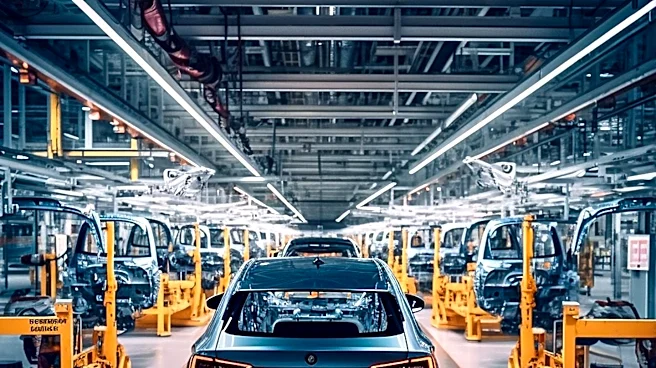
and Environment, and the State Administration for Market Regulation, are leading this effort. The campaign focuses on four key areas: production consistency, reliability, durability, and the testing and verification of new technologies. Manufacturers are required to conduct self-examinations and report their findings by the end of December 2026. This initiative goes beyond traditional recalls, scrutinizing whether mass-produced vehicles align with approved technical specifications, if supplier parts meet quality standards, and if manufacturing processes maintain reliability. Regulators are particularly interested in how new designs account for user habits, foreseeable misuse, and extreme operating conditions, as well as the accuracy of marketing claims for software features. Driver-assistance and autonomous-driving functions, data security, cybersecurity, cloud-platform protection, and artificial-intelligence safeguards are receiving specific attention, with authorities also concerned about the retention of event logs for investigations.
Why It's Important?
This campaign signifies a shift in China's approach to automotive quality, moving beyond basic manufacturing defects to encompass the complexities of software-defined vehicles and advanced technologies. The rapid pace of innovation and intense competition within the Chinese automotive market, particularly in electric vehicles, has raised concerns about product validation. By emphasizing thorough testing and validation before deployment, China aims to prevent quality issues from arising due to shortened development cycles or pressure on suppliers. This is crucial as Chinese automakers increasingly compete on an international stage. A pattern of reliability problems could significantly damage brand reputation and trust, especially for newer brands seeking to establish themselves globally. The focus on cybersecurity, data security, and AI governance reflects the growing importance of these aspects in modern vehicles and the potential risks associated with their rapid integration. This initiative could set new benchmarks for quality control in the global automotive industry, influencing how other nations and manufacturers approach the validation of advanced vehicle technologies.
What's Next?
Manufacturers are expected to complete their self-examinations and report findings to local industry authorities by the end of December 2026. If defects are uncovered, companies are required to file recall plans and take proactive measures. Regulators will be closely monitoring enforcement, including additional inspections, potential suspension of non-compliant models from regulatory catalogs, and the frequency of voluntary defect disclosures. There will also be scrutiny over overstated claims regarding driver-assistance features. This campaign could lead to a slowdown in aggressive feature rollouts as manufacturers prioritize thorough testing and validation. The long-term impact may include a more mature and robust quality control framework within the Chinese automotive industry, potentially influencing global standards for vehicle development and technology integration. The emphasis on identifying problems early is intended to make quality assurance a manufacturer's primary responsibility, rather than a reactive measure after defects emerge.
Beyond the Headlines
The campaign highlights a deeper recognition by Chinese regulators that 'software quality is vehicle quality.' This reflects a fundamental shift in the automotive industry, where vehicles are increasingly becoming complex software platforms. The initiative's focus on user habits, foreseeable misuse, and extreme operating conditions for new designs underscores a proactive approach to safety and reliability in an era of rapid technological advancement. By scrutinizing marketing claims and requiring sufficient testing for AI and autonomous driving features, China is addressing the ethical and safety implications of deploying cutting-edge technologies. The emphasis on data security and cybersecurity also points to the growing importance of protecting user information and vehicle systems from malicious attacks. This comprehensive approach to quality control, encompassing both traditional manufacturing and advanced software, could serve as a model for other countries grappling with the challenges of regulating highly integrated and intelligent vehicles. It also suggests a strategic move by China to ensure the long-term competitiveness and trustworthiness of its automotive exports in the global market.