



What's Happening?
Chase Briscoe, a NASCAR driver, has explained that the value of teammates in modern Cup Series racing has decreased significantly due to the extensive availability of data and simulator technology. Briscoe noted that with current data analytics, he can access
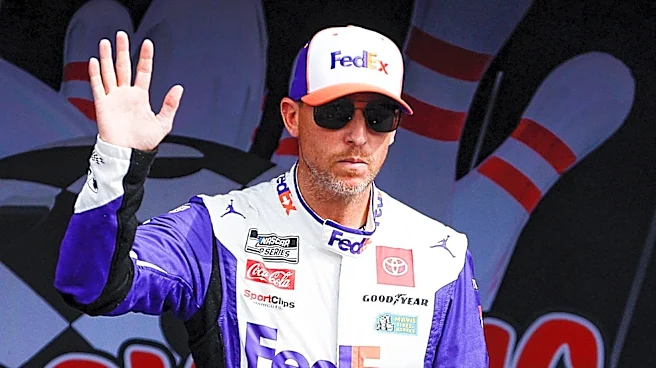
and study the driving approaches of any driver, regardless of whether they are a teammate, at any given track. This includes detailed information on throttle application, steering inputs, and other critical metrics. He stated that even when he was at Stewart-Haas Racing (SHR), he could analyze how Denny Hamlin drove a race track. While competition meetings with teammates like Denny Hamlin, Christopher Bell, and Ty Gibbs still offer advantages, particularly in understanding car setups, the direct on-track benefit of having a successful teammate to emulate has lessened. Briscoe also mentioned the increasing reliance on simulators for race preparation, although he acknowledged their limitations in fully replicating real-life track conditions and feel.
Why It's Important?
This shift in the importance of teammates reflects a broader technological transformation within NASCAR, impacting team dynamics, driver development, and race strategy. The proliferation of data and advanced simulation tools democratizes access to performance insights, allowing drivers to learn from a wider pool of competitors rather than being limited to their immediate team. This could lead to more individualized driving styles and less reliance on team-wide setups, potentially fostering greater on-track diversity. For teams, it means that while data analysis becomes paramount, the traditional role of a veteran teammate mentoring a rookie might evolve. The emphasis on data-driven preparation also highlights the significant investment in technology required to remain competitive in modern NASCAR, potentially widening the gap between well-funded teams with advanced analytical capabilities and those with fewer resources. This technological evolution is reshaping how drivers prepare, how teams collaborate, and ultimately, the competitive landscape of the sport.
What's Next?
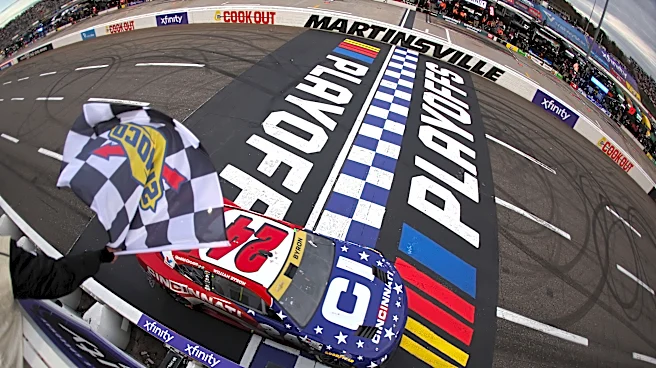
Briscoe's comments suggest a continued trend towards data-centric race preparation and a potential re-evaluation of team structures in NASCAR. Drivers will likely increasingly rely on simulator work and data analysis to refine their techniques and adapt to different tracks. Briscoe himself is actively changing his driving approach for Martinsville Speedway, focusing on long-run performance based on simulator insights, indicating a proactive adoption of these new methods. While simulators offer significant advantages, their limitations in fully replicating real-life feel mean that on-track experience and driver intuition will remain crucial. The ongoing development of simulation technology could further blur the lines between virtual and real-world racing, potentially leading to even more sophisticated preparation methods. This evolution will continue to influence how teams allocate resources, how drivers train, and how the sport maintains its competitive edge.
Beyond the Headlines
The diminishing role of teammates due to data and simulation technology raises interesting questions about the future of human intuition and experience in highly technical sports like NASCAR. While data provides objective metrics, the 'feel' of a car and the ability to adapt in real-time remain critical. Briscoe's struggle to replicate the 'rhythm' of Martinsville in the simulator highlights this gap. This trend could lead to a generation of drivers who are exceptionally skilled at data interpretation and simulator performance but might need to develop their on-track adaptability. Furthermore, the ethical implications of accessing and analyzing competitors' data could become a more prominent discussion point, particularly regarding proprietary information and competitive advantage. The balance between technological advancement and the human element of racing will be a key area of evolution for NASCAR in the coming years, potentially redefining what it means to be a top-tier driver.