


What's Happening?
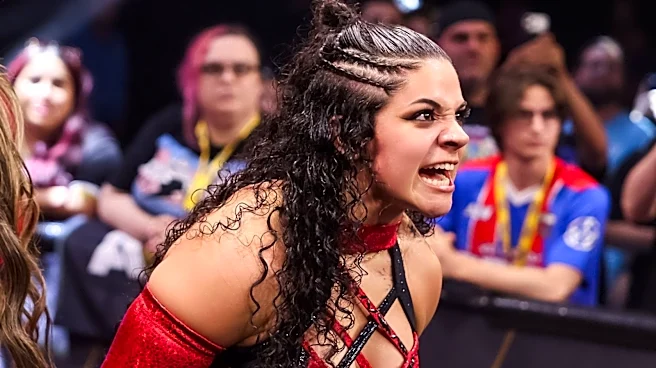
AEW President Tony Khan has publicly affirmed his support for wrestler Nyla Rose following issues with the Oklahoma State Athletic Commission. The controversy arose after Rose competed at an AEW/ROH taping in Oklahoma City on December 20, 2023. Oklahoma State Athletic Commission administrator
Jim Miller stated that Rose's participation violated rules concerning transgender women competing against cisgender women. Consequently, Rose did not wrestle when AEW returned to Tulsa the following year and has not competed in the state since. In an interview, Rose criticized the Athletic Commission, labeling them as 'hateful bigots' and a 'scam.' During an April 2024 media call, Khan addressed the situation, asserting that 'transgender people have rights' and that both he and AEW fully support Rose. Rose expressed gratitude for Khan's unwavering stance, noting his immediate and firm support for her.
Why It's Important?
This situation highlights the ongoing debate and challenges faced by transgender athletes in professional sports, particularly concerning regulatory bodies. Tony Khan's public and unequivocal support for Nyla Rose sends a strong message about AEW's stance on transgender rights and inclusion within professional wrestling. This could influence other sports organizations and commissions to re-evaluate their policies regarding transgender athletes, potentially setting a precedent for broader acceptance and fair competition. For AEW, this reinforces its brand image as an inclusive and progressive organization, which may resonate positively with a segment of its fanbase and attract talent who value such principles. Conversely, it could also draw criticism from groups holding opposing views, potentially leading to further public discourse and scrutiny of sports policies.
What's Next?
The immediate future may see continued discussions and potential legal challenges regarding the Oklahoma State Athletic Commission's rules and similar regulations in other states. AEW's continued support for Nyla Rose could lead to further advocacy efforts within the professional wrestling community for more inclusive policies. Other athletic commissions might face pressure to clarify or revise their guidelines concerning transgender athletes, potentially leading to a patchwork of differing regulations across states. This situation could also prompt more athletes and organizations to speak out on LGBTQ+ rights in sports, fostering a broader conversation about fairness, inclusion, and the role of regulatory bodies in defining eligibility criteria.
Beyond the Headlines
This incident transcends a single wrestling event, touching upon broader societal issues of transgender rights, discrimination, and the evolving understanding of gender identity in competitive sports. The conflict between athletic commissions and transgender athletes raises fundamental questions about who defines eligibility, based on what scientific and ethical principles, and how these definitions impact human rights. Khan's stance reflects a growing trend among some corporate leaders to take public positions on social issues, aligning their brands with progressive values. This could signify a long-term shift in how sports organizations navigate social justice issues, moving beyond mere entertainment to become active participants in cultural and political dialogues, potentially influencing public opinion and policy on a larger scale.