




What's Happening?
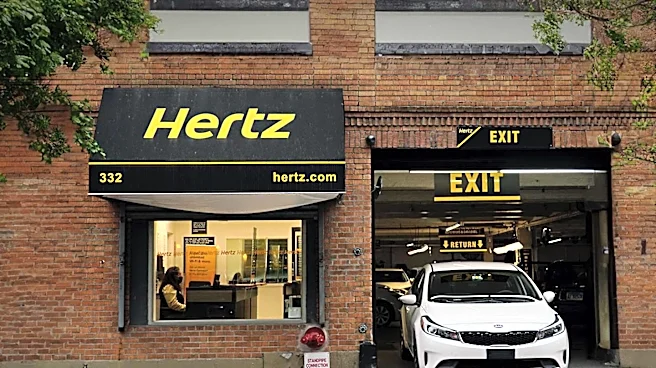
Hertz announced on Monday, November 9, that it will close all its physical Hertz Car Sales locations. This decision is part of a broader strategy to shift towards higher-yielding digital sales channels and leverage its existing nationwide rental network.
According to a company spokesperson, Hertz has expanded online buying through HertzCarSales.com, strengthened partnerships with retail partners, and grown its TestDrive+ program to over 300 participating Hertz rental locations. The closures are reportedly set to be finalized by Friday, November 20, though this date was not confirmed by Hertz. This move follows Hertz's recent collaborations with Amazon Autos, which began in August 2025, and eBay, announced in May, establishing digital showrooms for vehicle sales.
Why It's Important?
This strategic pivot by Hertz signifies a significant shift in the automotive retail landscape, emphasizing the growing dominance of online sales channels. By closing physical locations, Hertz aims to streamline operations and reduce costs, aligning with CEO Wayne “Gil” West’s focus on cost control. The company's move to prioritize digital platforms like HertzCarSales.com, Amazon, and eBay reflects a broader industry trend where consumers increasingly prefer online car purchasing options. This could set a precedent for other traditional car sales businesses to re-evaluate their physical footprints and invest more heavily in e-commerce solutions. The shift could also impact employment in the automotive retail sector, as the fate of Hertz Car Sales staff remains unaddressed by the company.
What's Next?
Customers will continue to be able to purchase vehicles through Hertz's online platform, HertzCarSales.com, its TestDrive+ program, and via its partnerships with Amazon and eBay. The company's focus will be on optimizing these digital channels and integrating its used car operations with its extensive rental locations. This transition is expected to be closely watched by competitors and industry analysts to assess the effectiveness of a fully digital-centric car sales model for a major player like Hertz. The company's success in this endeavor could influence future investment and strategic decisions across the automotive retail industry, potentially accelerating the move away from traditional brick-and-mortar dealerships.
Beyond the Headlines
Hertz's decision to abandon physical car sales locations in favor of online channels highlights a fundamental change in consumer behavior and the retail experience. This move underscores the increasing expectation for convenience and digital accessibility in high-value purchases like automobiles. It also raises questions about the long-term viability of traditional dealership models and the potential for a more integrated, asset-light approach to car sales that leverages existing infrastructure, such as rental locations. The ethical implications regarding the impact on employees from the closed physical locations and the broader societal shift towards digital-only interactions for significant transactions will be important considerations as this trend evolves.