







What's Happening?
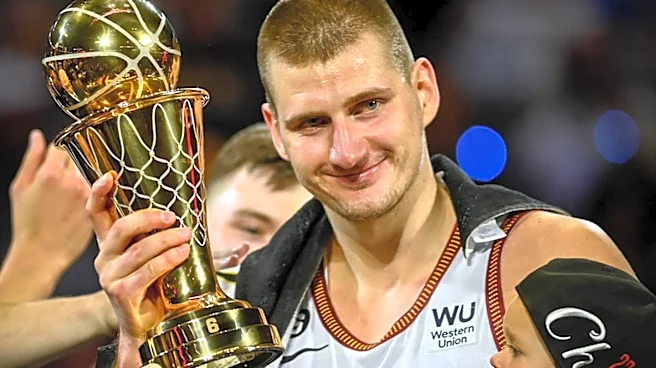
Former NBA player DeMarcus Cousins has publicly disagreed with Nikola Jokic's assertion that NBA players should experience the pressure of playing in the EuroLeague. Jokic had suggested that playing in Europe exposes players to intense pressure, with significant
consequences for even a few losses. Cousins, however, countered by stating that the U.S. is the "standard for basketball," emphasizing the consistent dominance of the U.S. men's basketball team in Olympic history. He highlighted that the U.S. has secured 17 out of 20 Olympic gold medals, including five consecutive wins since 2004. Gilbert Arenas further supported this by pointing out that American players who do not make NBA rosters often go to Europe and become dominant players there, with Americans frequently leading EuroLeague teams in scoring and winning MVP awards, such as Mike James and Kendrick Nunn.
Why It's Important?
This debate underscores a significant point of contention regarding the perceived global hierarchy and competitive intensity of basketball. Cousins' argument about U.S. Olympic dominance reinforces the long-held belief in American basketball supremacy, particularly in terms of raw talent and athletic prowess. This perspective is crucial for understanding the U.S. national team's approach to international competitions and its impact on global basketball standards. Conversely, Jokic's viewpoint highlights the unique pressures and tactical demands of European basketball, which could offer valuable lessons in team cohesion and strategic execution for NBA players. The success of American players in the EuroLeague, even those who couldn't secure permanent NBA spots, suggests that the talent pool in the U.S. is deep and that European leagues provide a high-level platform for continued professional development. This discussion influences how U.S. basketball stakeholders view international play and player development pathways.
What's Next?
The ongoing discussion between NBA players and international stars about the differing pressures and styles of play in the NBA and EuroLeague is likely to continue. This dialogue could lead to increased cross-cultural exchanges in basketball, potentially influencing coaching philosophies and player development strategies in both regions. While U.S. Olympic dominance remains a strong point for American basketball, the recognition of the tactical and pressure-filled environment of the EuroLeague might encourage more NBA players to consider international experiences, even if only for short stints. This could foster a more globally integrated basketball ecosystem, where players are exposed to a wider range of competitive environments and strategic approaches, ultimately enhancing the overall quality of the sport.
Beyond the Headlines
The exchange between Cousins and Jokic touches upon deeper cultural perceptions of sports and competition. Cousins' emphasis on Olympic gold medals reflects a results-oriented culture where ultimate victory is the primary measure of success. Jokic's focus on the intense, week-to-week pressure in the EuroLeague speaks to a different kind of competitive ethos, one where consistent performance under scrutiny and community pride are paramount. This cultural difference can impact player mentality, team dynamics, and fan engagement. For U.S. basketball, understanding these varying perspectives can help in developing more well-rounded athletes who are not only skilled but also mentally resilient and adaptable to diverse competitive environments. It also highlights the global nature of basketball, where different regions contribute unique elements to the sport's rich tapestry.