








What's Happening?
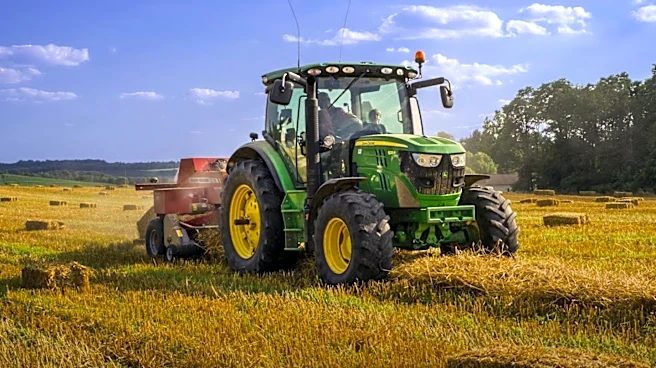
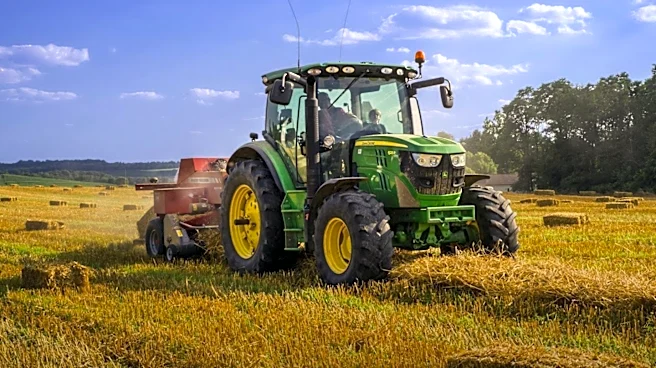
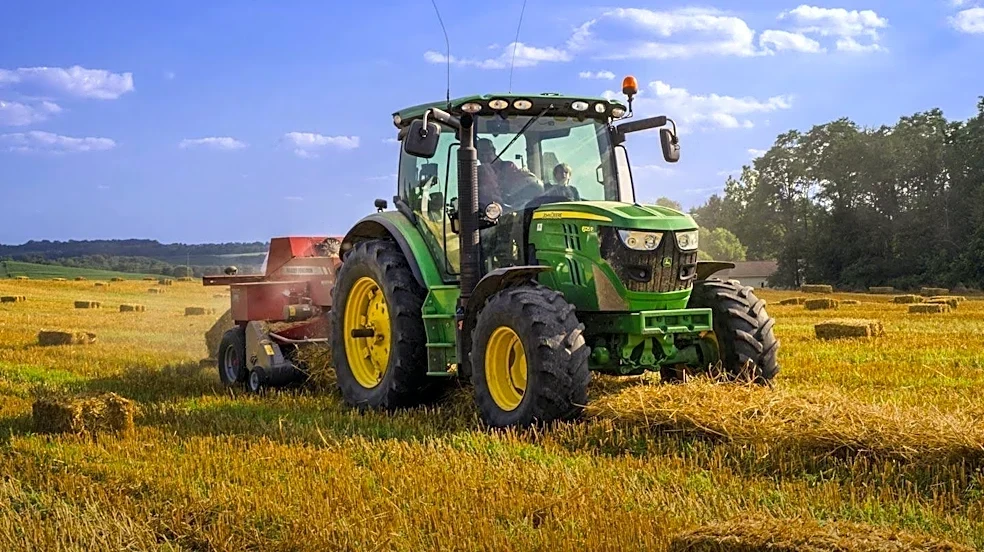
John Deere, a company founded in 1837, continues its legacy of innovation in agricultural machinery. The company has introduced the John Deere AutoTrac Vision 2.0, an advanced system that integrates guidance, precision technology, and new steering capabilities
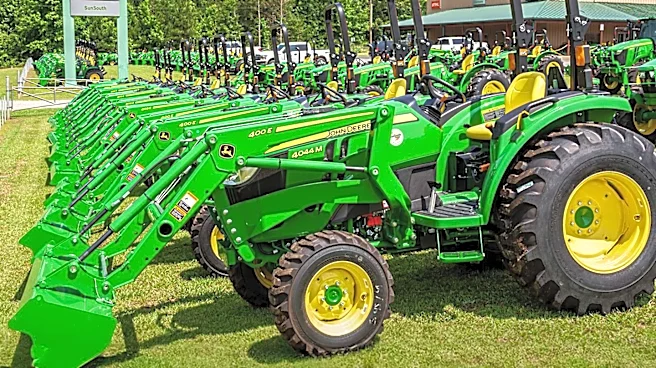
to boost productivity for farmers. This development is part of John Deere's ongoing commitment to solving farmers' problems through technological advancements. In addition to this, John Deere offers a diverse range of utility tractors, including models such as the 5095M, 5100E Cab, and 5130M, all powered by proprietary John Deere engines. These offerings underscore the company's focus on providing robust and efficient solutions for modern agriculture. The company's long-term brand strategy emphasizes addressing the practical needs of farmers, which has been a key driver of its sustained growth and market leadership.
Why It's Important?
The introduction of technologies like AutoTrac Vision 2.0 is crucial for the U.S. agricultural sector, which constantly seeks to enhance efficiency and output. Precision agriculture tools help farmers optimize resource use, reduce waste, and increase yields, directly impacting food production and the economic viability of farming operations. For U.S. industries, John Deere's innovations signify continued investment in domestic manufacturing and technological development within the agricultural machinery sector. This can lead to job creation in engineering, manufacturing, and support services. Farmers stand to gain from improved productivity and potentially lower operational costs, while the broader economy benefits from a more resilient and efficient food supply chain. The company's focus on solving farmer problems also reinforces its market position, influencing competition and innovation trends within the agricultural equipment industry.
What's Next?
Looking ahead, John Deere is expected to continue integrating advanced technologies into its product lines, further solidifying its role as a leader in agricultural innovation. The company's emphasis on precision agriculture suggests future developments will likely focus on automation, data analytics, and connectivity to create more intelligent and autonomous farming systems. This trajectory could lead to increased demand for skilled labor in technology and maintenance within the agricultural sector. Competitors will likely respond by accelerating their own research and development efforts, fostering a dynamic environment of innovation in farm machinery. Farmers can anticipate a continuous stream of new tools designed to address evolving agricultural challenges, such as labor shortages and the need for sustainable practices. The long-term impact could include a transformation of farming practices, making them more data-driven and less labor-intensive.
Beyond the Headlines
Beyond the immediate benefits of increased productivity, John Deere's technological advancements have deeper implications for the future of agriculture and rural communities in the U.S. The shift towards highly automated and data-intensive farming could reshape the skill sets required for agricultural work, potentially leading to a demand for tech-savvy farmers and agricultural technicians. This could also influence educational programs and vocational training in rural areas. Ethically, the increasing reliance on technology raises questions about data privacy for farmers and the potential for digital divides, where smaller farms might struggle to adopt expensive new technologies. Culturally, the image of farming is evolving from purely manual labor to a more technologically sophisticated profession, which could attract a new generation to agriculture. The long-term shift could see U.S. agriculture becoming a high-tech industry, with significant implications for food security, environmental sustainability, and the economic landscape of rural America.