







What's Happening?
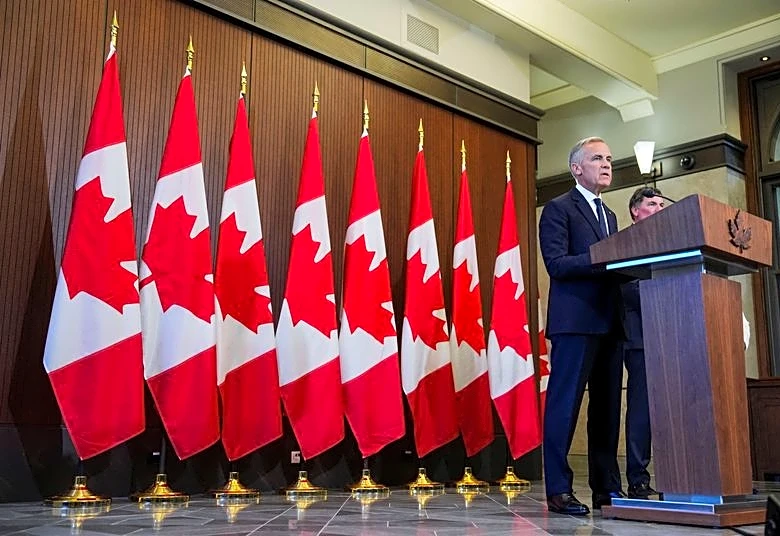
The United States has implemented 50% tariffs on approximately $20 billion worth of Canadian products, effective Saturday, following a breakdown in trade negotiations between the two countries. Canadian Prime Minister Mark Carney stated that Canada will
match these tariffs 'dollar for dollar' to protect its workers and businesses. The tariffs were imposed after the U.S. accused Canada of 'discriminatory treatment' against American alcohol, automobile, and dairy products. U.S. Trade Representative Jamieson Greer indicated that Canada declined to finalize a trade deal under terms agreed upon earlier in the week, despite the Trump administration offering 'significant tariff reductions on steel, aluminum, autos and lumber' in exchange for Canadian concessions. This escalation comes after President Trump had previously postponed the tariffs as talks appeared to progress, and despite his expressed 'good relationship' with Prime Minister Carney.
Why It's Important?
This imposition of tariffs and Canada's vow of retaliation signifies a significant escalation in trade tensions between two historically close economic partners. The 50% duties on $20 billion worth of Canadian goods, affecting about 5% of Canadian imports to the U.S., could have substantial economic repercussions for both nations. For the U.S., consumers may face higher prices for certain Canadian products, and American businesses relying on Canadian imports could see increased costs. For Canada, these tariffs are expected to weigh heavily on its economy, potentially leading to job losses and further straining the trade relationship. The retaliatory tariffs from Canada will similarly impact U.S. industries and consumers. This situation also highlights the challenges in international trade negotiations, particularly when one party perceives 'last-minute changes' as unfair, making de-escalation more difficult, as noted by former U.S. commerce official Ryan Majerus.
What's Next?
The immediate consequence will be the implementation of Canada's retaliatory tariffs, matching the U.S. duties 'dollar for dollar.' This will likely lead to increased costs for consumers and businesses in both countries. The breakdown in negotiations suggests a prolonged period of trade friction, with potential for further economic measures from either side. The U.S. administration's stated reasons for the tariffs, citing 'discriminatory treatment' of American products, indicate that resolution would require significant concessions from Canada regarding its alcohol, automobile, and dairy sectors. Conversely, Canada's stance on protecting its industries suggests it will resist terms it deems 'unfair' or 'uneconomic.' The ongoing trade dispute could also influence future bilateral agreements and potentially impact broader North American trade relations.
Beyond the Headlines
The current trade dispute between the U.S. and Canada extends beyond immediate economic impacts, touching upon the reliability of international trade agreements and the dynamics of diplomatic relations. The Canadian Prime Minister's assertion that the U.S. proposed terms 'called into question the reliability of any deal' underscores a deeper concern about trust and predictability in trade partnerships. This situation could prompt other nations to re-evaluate their trade strategies and reliance on agreements with the U.S., potentially leading to a more fragmented global trade landscape. Furthermore, the focus on specific sectors like alcohol, automobiles, and dairy highlights the protectionist tendencies that can emerge in trade policy, potentially setting precedents for how future disputes are handled and influencing the global supply chain for these key industries.