




What's Happening?
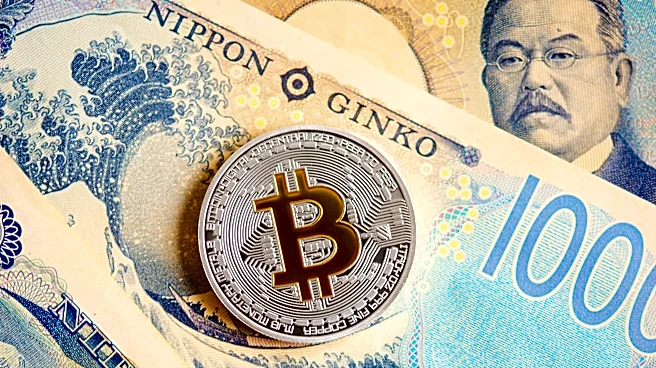
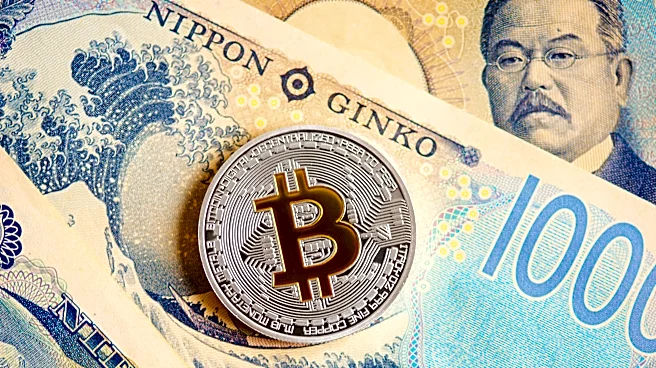
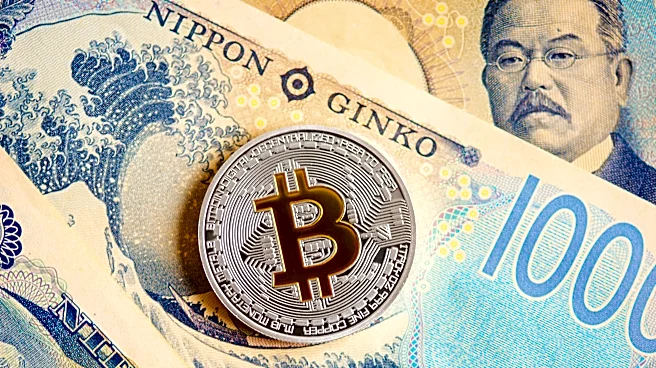
The Bank of Japan (BOJ) is expected to raise its policy rate from 1.25% to 1.50% at its December 2026 meeting. This anticipated tightening of monetary policy is drawing attention from Bitcoin investors, as highlighted by Phillip Lord, CEO of Bitcoin Japan Corporation.
Lord suggests that yen funding conditions significantly influence Bitcoin markets. The current yen exchange rate of 159–160 per USD makes borrowing in yen attractive, but also exposes leveraged traders to risks if the currency fluctuates sharply. Japan's Q3 2026 GDP contracted by 0.1% annualized, even as core CPI measures remain elevated at 2.1–2.2%, supporting predictions for further rate hikes. The rising cost of yen funding could make leveraged positions in Bitcoin more expensive to maintain, potentially leading to deleveraging and selling pressure in the crypto market.
Why It's Important?
The BOJ's monetary policy decisions have broader implications beyond Japan's borders, particularly for global financial markets and specific asset classes like Bitcoin. An increase in yen funding costs directly impacts traders who have leveraged positions using cheap yen. If these costs climb as expected, it could force traders to reduce their positions, potentially triggering a sell-off in Bitcoin and affecting liquidity across the wider cryptocurrency market. This situation underscores the interconnectedness of global financial systems, where monetary policy shifts in one major economy can create ripple effects in seemingly unrelated markets. For U.S. investors and traders, understanding these international monetary policy dynamics is crucial for managing risk and identifying potential market movements.
What's Next?
The immediate focus for investors will be the December BOJ meeting and whether the anticipated rate hike to 1.50% materializes. Beyond this, market participants will closely monitor demand at future Japanese government bond auctions, as weak bidding could push yields higher. The overnight call rate, currently around 1.23%, and the yen's position against the USD will also be key indicators. If yen funding costs continue to rise, it could lead to further deleveraging in Bitcoin and other crypto assets. Companies like Bitcoin Japan Corporation, which recently made its first treasury purchase of Bitcoin, will need to justify their strategies to shareholders amidst changing funding conditions, potentially setting a precedent for other Japanese firms considering crypto investments.
Beyond the Headlines
The situation highlights a less obvious but critical link between traditional monetary policy and the nascent cryptocurrency market. The 'carry trade,' where investors borrow in a low-interest-rate currency (like the yen) to invest in higher-yielding assets (like Bitcoin), is a significant factor. As the BOJ tightens its policy, the profitability and viability of such trades diminish, potentially unwinding large positions. This could expose vulnerabilities in the crypto market that are not directly tied to its internal dynamics but rather to external macroeconomic shifts. It also raises questions about the long-term stability of crypto investments when global liquidity conditions change, suggesting that even decentralized assets are not immune to the forces of traditional finance.