







What's Happening?
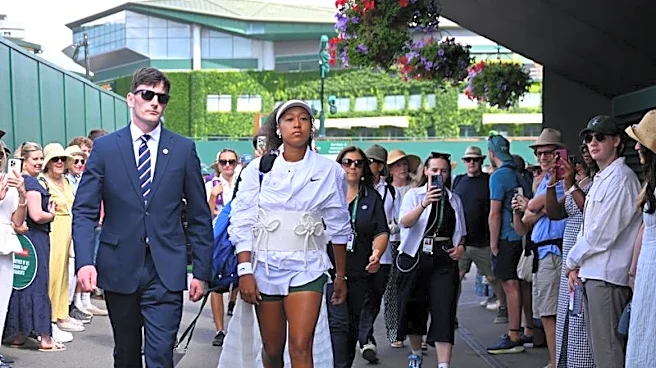
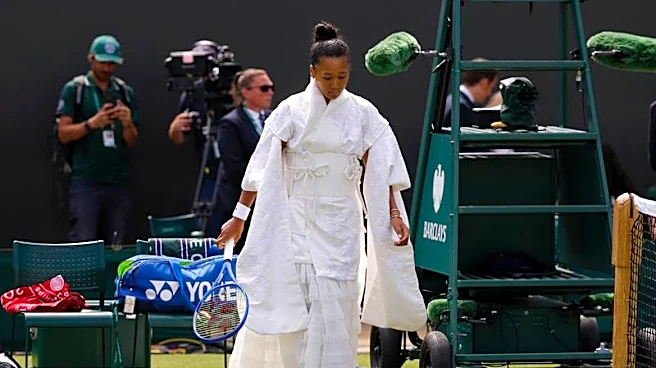
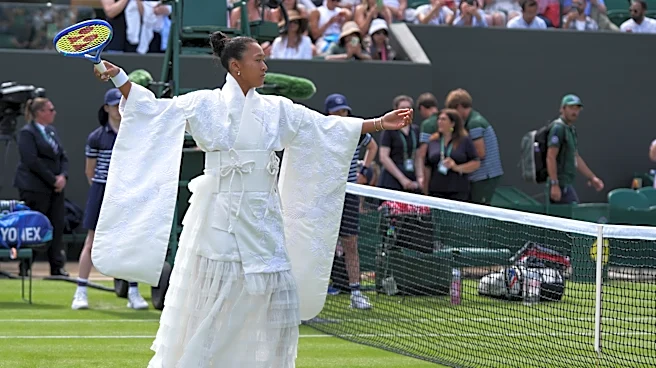
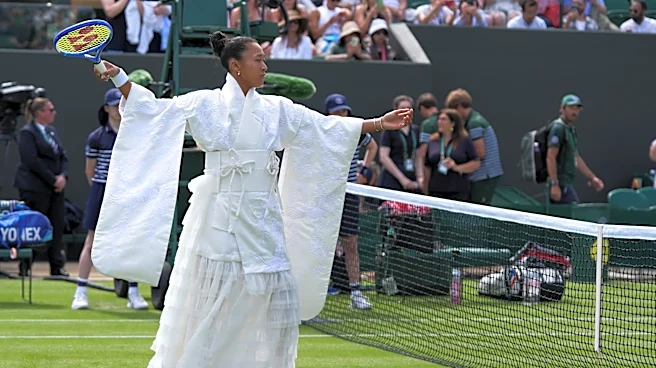
Naomi Osaka, the renowned Japanese tennis player, made a striking appearance on the opening day of Wimbledon with a kimono-inspired outfit. The ensemble, designed in collaboration with Tokyo-based designer Hana Yagi, featured a floor-length gown embroidered
with cranes and cherry blossoms, complemented by a traditional kanzashi hair ornament. The outfit was crafted from upcycled textiles, including vintage kimonos and a shiromuku wedding dress, and adhered to Wimbledon's all-white dress code. Osaka's choice of attire was a nod to her cultural heritage and was inspired by the traditional Japanese ceremonial dress. Her fashion statement drew significant attention from both fans and fellow players, highlighting her passion for using fashion as a medium for storytelling.
Why It's Important?
Osaka's choice to wear a kimono-inspired outfit at Wimbledon underscores the intersection of sports and cultural expression. By incorporating elements of her Japanese heritage into her attire, Osaka not only adhered to the tournament's traditional dress code but also brought a unique cultural narrative to the global stage. This move highlights the growing trend of athletes using their platforms to express personal and cultural identities, potentially influencing how sports and fashion intersect. Additionally, Osaka's outfit choice may inspire other athletes to explore and celebrate their cultural backgrounds, fostering a more diverse and inclusive environment in international sports.
What's Next?
As Osaka continues to compete in Wimbledon, her fashion choices may continue to draw attention and spark discussions about cultural representation in sports. The positive reception of her kimono-inspired outfit could encourage other athletes to embrace and showcase their cultural identities in similar ways. Furthermore, the All England Lawn Tennis Club's relaxed stance on Osaka's attire, as long as it meets the all-white dress code, may pave the way for more creative expressions within the boundaries of traditional sports regulations. This development could lead to a broader acceptance of diverse cultural expressions in sports attire.