






What's Happening?
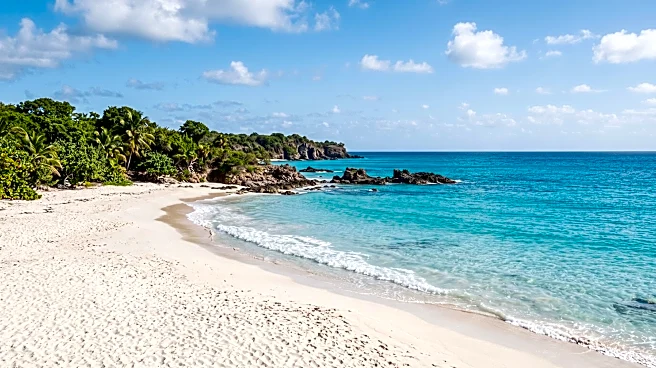
The government of Antigua and Barbuda has rejected a proposed EC$100 million (approximately US$37 million) investment by Royal Caribbean at Fort James, a popular beach near the capital of St. John's. Prime Minister Gaston Browne announced the decision,
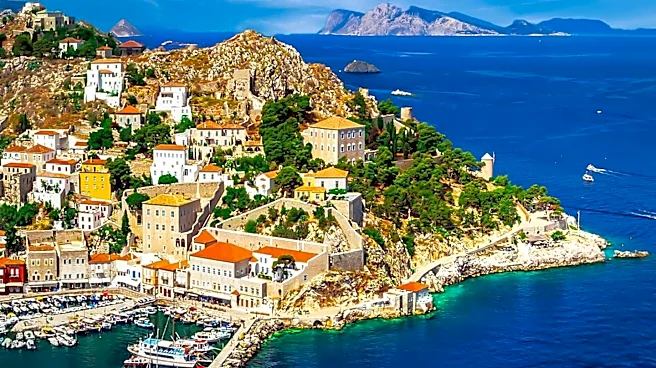
stating that Royal Caribbean sought exclusive access to the beachfront property, a condition the government was unwilling to accept. The government prioritizes public access to beaches, with Browne emphasizing that 'our people must have access to the beach.' This decision comes as Royal Caribbean pursues an ambitious expansion of its land-based vacation offerings, including private islands and beach clubs. The company has faced similar resistance previously, with Mexican environmental authorities rejecting permits for its Perfect Day Mexico project in Mahahual in May 2026 due to environmental impact concerns. Despite these setbacks, Royal Caribbean is expanding its beach club portfolio in other markets, with Royal Beach Club Santorini in Greece opening in 2026 and Royal Beach Club Lelepa in Vanuatu expected to open in October 2027.
Why It's Important?
This rejection highlights the growing tension between cruise lines' expansion strategies and local community interests, particularly concerning public resources like beaches. For Royal Caribbean, private destinations are crucial for creating controlled, experience-driven port visits and generating additional revenue beyond cruise fares. However, the Antiguan government's stance underscores a broader global trend where local authorities are increasingly scrutinizing large-scale tourism developments to protect public access and environmental integrity. This decision could influence how other Caribbean nations approach similar investment proposals from major cruise lines, potentially leading to more stringent conditions for development. It also signals to the cruise industry that local support and balancing tourism development with community interests are as vital as finding attractive locations and building amenities. The outcome in Antigua could set a precedent for future negotiations, impacting the profitability and feasibility of similar projects across the region.
What's Next?
It remains to be seen whether Royal Caribbean will revise its proposal for Fort James to accommodate the Antiguan government's demand for public beach access or if it will seek alternative locations for its next beach club. The Antiguan government, meanwhile, plans to improve public recreational spaces at several beaches, including Fort James, Little Ffryes, and Ffryes, with concept drawings already prepared for Fort James. A committee has also been established to review existing beach access points and negotiate with private landowners for additional routes to the shoreline. This suggests a continued focus on enhancing public beach access and facilities, potentially creating new opportunities for local tourism development that aligns with community priorities. The broader cruise industry will likely monitor these developments closely, as the Antiguan decision could influence future investment strategies and negotiations in other popular cruise destinations.
Beyond the Headlines
The Antiguan government's decision to prioritize public beach access over a significant foreign investment raises important questions about sustainable tourism development and the balance between economic growth and community rights. This case reflects a global shift where host communities are asserting greater control over their natural resources and cultural heritage in the face of large-scale commercial interests. It also highlights the ethical considerations for multinational corporations operating in developing nations, emphasizing the need for genuine engagement and respect for local values. The long-term implications could include a re-evaluation of 'private island' or 'exclusive beach club' models by cruise lines, potentially leading to more integrated and community-friendly tourism projects. This incident could also empower other small island nations to negotiate more favorable terms for their populations when dealing with powerful international tourism operators, fostering a more equitable distribution of tourism benefits.