






What's Happening?
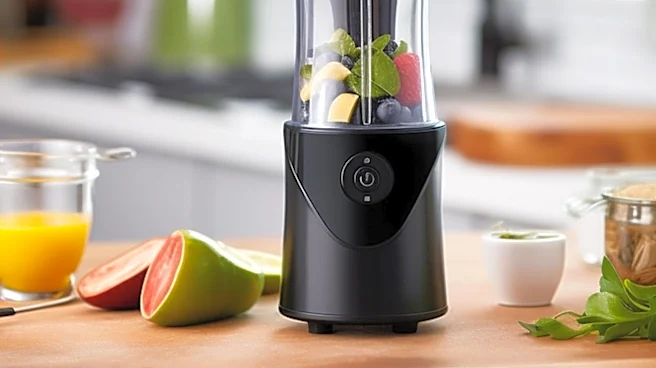
The Vitamix Nano, the company's first personal blender, has been reviewed by Good Housekeeping's senior food editor, who tested its performance over a month. The blender, launched in late August, was evaluated using the Good Housekeeping Institute Kitchen
& Cooking Lab's standard methodology, which included making coffee grounds, smoothies, milkshakes, and frozen drinks. The Vitamix Nano earned high marks for its ability to produce exceptionally smooth results, particularly with green smoothies, milkshakes, and frozen beverages, even when handling fibrous ingredients like kale and ice. Its 'SmoothiePilot' option automatically adjusts blending time and speed, while manual settings offer a powerful maximum speed. However, the blender was less impressive for grinding coffee beans and lacks a pulse setting, limiting its versatility for certain tasks. The 20-ounce blending cups also convert into travel cups, are lightweight, and dishwasher-safe.
Why It's Important?
This review is significant for consumers in the U.S. market looking for high-performance kitchen appliances, particularly personal blenders. Vitamix, known for its full-size blenders, is entering a competitive segment with the Nano, and a positive review from a reputable source like Good Housekeeping can influence purchasing decisions. The emphasis on smooth results for health-conscious beverages like green smoothies aligns with growing consumer trends towards healthier eating and convenient meal preparation. While the $200 price point is higher than many personal blenders, the review suggests it could be a worthwhile investment for daily smoothie makers, potentially impacting sales and market share within the small appliance sector. The identified drawbacks, such as difficulty attaching the cup and the lack of a pulse function, highlight areas where competitors might differentiate their products or where Vitamix could make future improvements.
What's Next?
Consumers interested in personal blenders will likely consider the Vitamix Nano based on this review, weighing its high performance for smoothies against its higher price and minor drawbacks. Vitamix may leverage this positive feedback in its marketing campaigns to attract health-conscious individuals and those seeking premium kitchen gadgets. The identified limitations, such as its less effective coffee grinding and absence of a pulse setting, could prompt Vitamix to consider future product iterations or accessories to enhance versatility. Competitors in the personal blender market will likely analyze this review to identify opportunities to highlight their own product strengths or address the gaps identified in the Vitamix Nano, potentially leading to increased innovation and competition in the small kitchen appliance category.
Beyond the Headlines
The introduction and positive reception of the Vitamix Nano reflect a broader trend in the U.S. consumer market towards specialized, high-quality kitchen appliances that cater to specific lifestyle needs, such as health and convenience. This shift suggests that consumers are increasingly willing to invest in premium products that deliver superior performance for their daily routines, even if it means a higher cost. The focus on 'exceptionally smooth' results for smoothies underscores the evolving consumer expectation for food preparation, moving beyond basic functionality to demand refined textures and consistent quality. This trend could encourage other appliance manufacturers to develop more specialized and high-end versions of their products, further segmenting the market and offering consumers a wider range of choices tailored to their precise preferences.