





What's Happening?
Silver prices experienced a significant decline, with spot silver falling on Friday, November 13, 2026, and COMEX silver futures settling at their lowest point of the year. This drop occurred despite the Silver Institute's forecast of a 35 million ounce
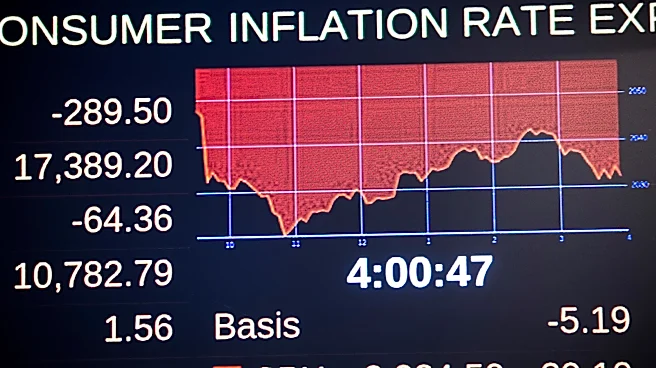
supply deficit for 2026, marking the sixth consecutive annual deficit. The 10-year Treasury real yield closed at 2.91% on Friday, November 13, the highest close of the week, which experts like Christopher Lewis of FXEmpire suggest weakens the bullish case for silver. Kitco's market report attributed the session's drop to concerns about industrial demand and restrictive financial conditions. The World Bank also noted a 14% fall in silver prices during the third quarter, citing eased physical market tightness and higher interest rates as contributing factors. The Silver Institute's outlook indicates a narrower shortfall and metal released through ETP selling have helped ease physical market tightness, contributing to the price pressure.
Why It's Important?
The current decline in silver prices, despite a projected supply deficit, highlights a critical disconnect between fundamental supply-demand dynamics and broader macroeconomic factors. Rising real yields, which represent the inflation-adjusted return on Treasuries, make non-yielding assets like silver less attractive to investors. This trend can divert investment capital away from precious metals and into government bonds, impacting the financial health of mining companies and the overall commodities market. For industries that rely on silver, such as solar panel manufacturing and electronics, lower prices could offer a temporary cost advantage, but sustained volatility creates uncertainty for long-term planning. The Federal Reserve's monetary policy, particularly its stance on interest rates, plays a pivotal role in shaping these real yields, thus directly influencing investor sentiment and the valuation of precious metals in the U.S. economy.
What's Next?
The immediate future for silver prices will be heavily influenced by upcoming economic data and Federal Reserve decisions. The delayed CFTC Commitments of Traders report, due on Monday, November 16, 2026, will offer insights into speculative positioning. October retail sales and the Fed's industrial production report, scheduled for Tuesday, November 17, 2026, will provide crucial indicators of economic activity and industrial demand. The minutes from the Fed's October 27 and 28 meeting, to be released on Wednesday, November 18, 2026, could offer further clarity on the central bank's monetary policy intentions. The Federal Reserve meeting on December 8 and 9, 2026, with the decision on December 9, is a key event that could significantly impact interest rate expectations and, consequently, the investment appeal of silver. Longer-term forecasts from institutions like the World Bank and J.P. Morgan suggest varying price targets for 2026 and 2027, but these are subject to the evolving economic landscape.
Beyond the Headlines
The current situation in the silver market underscores the complex interplay between physical supply, investment demand, and monetary policy. While a supply deficit typically suggests upward price pressure, the influence of rising real yields demonstrates how financial instruments and central bank actions can override traditional commodity market fundamentals. This highlights a broader trend where financialization increasingly impacts raw material prices, potentially detaching them from their industrial utility. The debate over whether silver will recover in 2026 reflects a deeper uncertainty about the future direction of inflation, interest rates, and global economic growth. This scenario also brings to light the differing perspectives and potential biases of various market analysts and institutions, whose forecasts can be influenced by their stakeholders or specific market positions, adding another layer of complexity for investors seeking reliable guidance.