







What's Happening?
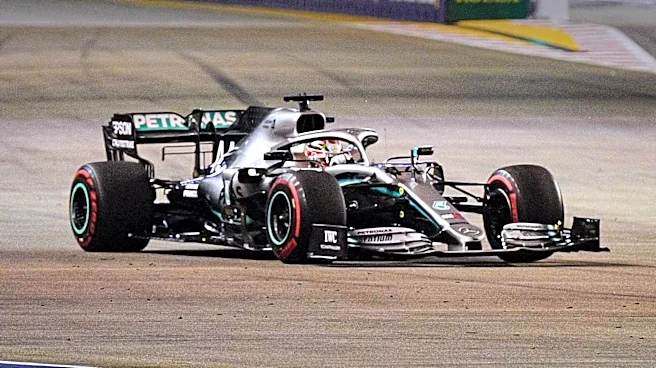
October 2nd marks the ten-year anniversary of Lewis Hamilton's engine failure at the 2016 Malaysian Grand Prix, an event that significantly impacted his championship bid against then-teammate Nico Rosberg. Hamilton, leading the race from pole position,
experienced a catastrophic engine blow-up on Lap 41 of 56. This incident, caused by a big-end bearing failure due to a loss of oil pressure, was only his second retirement of the season. The retirement allowed Rosberg to secure a third-place finish, extending his lead in the championship by 23 points. Hamilton publicly questioned Mercedes, stating, 'Someone needs to give me some answers because this is not acceptable. We are fighting for the championship and only my engines are failing. It does not sit right with me.' This fueled conspiracy theories about Mercedes sabotaging Hamilton, which the team's then-technical chief Paddy Lowe vehemently denied, emphasizing the inherent risks in high-performance engineering.
Why It's Important?
This event is important as it highlights the critical role of mechanical reliability in high-stakes professional sports like Formula 1. For Lewis Hamilton, it was a pivotal moment that arguably cost him his eighth world championship, as Rosberg ultimately won the title by just five points. The incident also brought to light the intense pressure and scrutiny faced by teams and drivers, leading to public accusations and conspiracy theories, even against a dominant team like Mercedes. The emotional impact on Hamilton, who described it as an 'incredibly raw moment,' underscores the personal toll of such setbacks. Furthermore, it serves as a case study in how a single mechanical failure can alter the course of a championship, demonstrating that even with superior driving, technical issues can be insurmountable.
What's Next?
While this specific event is a historical one, its legacy continues to influence discussions around reliability and team dynamics in Formula 1. For Lewis Hamilton, as he continues his career, the memory of such incidents likely reinforces the importance of robust engineering and strategic planning. For Mercedes and other F1 teams, the 2016 Malaysian Grand Prix serves as a reminder of the constant need for innovation and meticulous quality control in engine development. Future races will continue to see intense competition where mechanical integrity is as crucial as driver skill. The ongoing pursuit of performance at the very limits of engineering means that such failures, while rare, remain a constant threat and a significant factor in championship battles.
Beyond the Headlines
The 2016 Malaysian Grand Prix engine failure for Lewis Hamilton delves into deeper implications concerning the psychological aspect of elite sports and the public's perception of fairness. Hamilton's immediate reaction and subsequent comments, though later clarified, revealed the immense pressure and suspicion that can arise when a dominant competitor faces unexpected setbacks. The swift emergence of conspiracy theories, despite logical explanations from the team, illustrates how easily public sentiment can be swayed in high-profile sporting events. This incident also highlights the delicate balance between individual achievement and team performance in Formula 1, where a driver's fate is inextricably linked to the reliability of their machinery. It underscores the ethical considerations for teams to ensure equitable treatment and resources for all their drivers, especially when championship contention is tight.