






What's Happening?
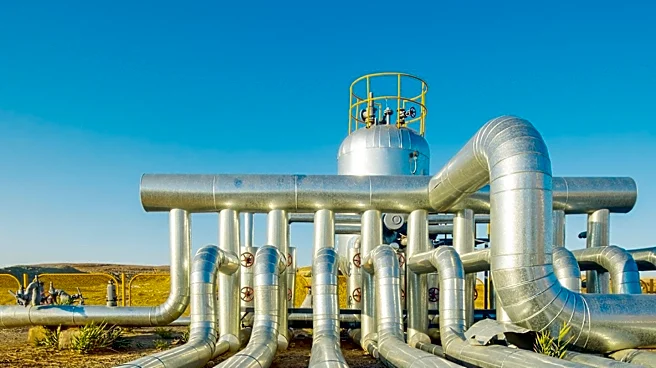
Kuwait Petroleum Corporation (KPC) has entered into a $16 billion agreement with a consortium of global investment firms, including Blackstone, Brookfield Asset Management, and KKR. This deal involves a lease-and-leaseback arrangement for KPC's crude
oil pipeline network, marking the largest foreign direct investment in Kuwait's history. The agreement, known as Project Peregrine, establishes a joint venture with the three investors for a 20.5-year period, featuring a volume-based tariff. KPC's subsidiary, Kuwait Oil Company (KOC), will retain a 51% stake and operational control of the network, which includes 13 pipelines spanning approximately 320 kilometers. The transaction is expected to generate $7.85 billion in upfront proceeds, supporting KPC's capital expenditure plans. This move is part of a broader strategy by Gulf state oil companies to attract foreign capital and fund domestic investments.
Why It's Important?
This significant investment underscores Kuwait's growing appeal as a destination for global capital, even amidst regional geopolitical tensions. The deal is crucial for Kuwait as it seeks to diversify its economy and secure funding for its domestic investment plans. For the U.S.-based firms involved, this represents a strategic expansion into the Middle Eastern energy sector, potentially yielding substantial returns. The transaction also highlights the ongoing trend of Gulf states leveraging infrastructure assets to attract foreign investment, following similar moves by Saudi Arabia, Abu Dhabi, and Bahrain. The geopolitical context, including recent tensions between the U.S. and Iran, adds complexity to the investment landscape, but also emphasizes the strategic importance of securing energy infrastructure in the region.
What's Next?
The successful execution of this deal may encourage further foreign investments in Kuwait and the broader Gulf region. As the joint venture progresses, stakeholders will likely monitor the geopolitical situation closely, particularly the ongoing tensions involving Iran. The deal's structure, involving a long-term lease-and-leaseback arrangement, suggests a stable revenue stream for the investors, which could lead to similar future investments in the region. Additionally, the influx of capital from this transaction is expected to bolster KPC's ability to pursue its capital expenditure plans, potentially leading to further development and modernization of Kuwait's oil infrastructure.