





What's Happening?
The warehousing industry is undergoing a significant transformation, moving beyond its traditional role of simple storage to become a critical component of logistics and supply chain management. Modern warehousing encompasses a complex array of activities
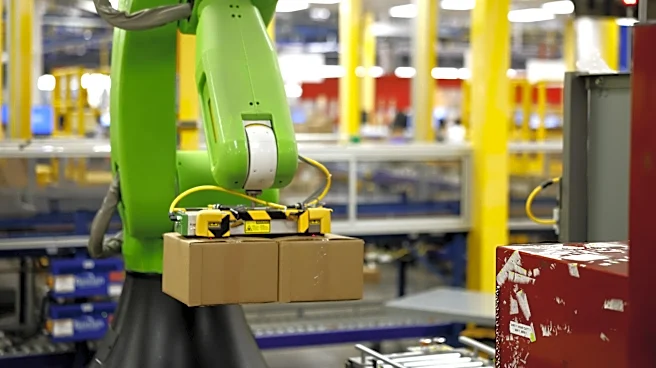
including receiving, put-away, inventory control, picking, packing, value-added services, quality checks, and dispatch preparation. This evolution is driven by the increasing demands of e-commerce, international trade, and the need for efficient supply chain operations. Businesses are now evaluating various models, such as in-house operations, outsourced fulfillment, and multi-site networks, to optimize their warehousing strategies. The focus has shifted to how warehousing influences labor productivity, order accuracy, working capital, and customer satisfaction, making it a strategic decision point rather than just a cost center. The integration of technology, such as Warehouse Management Systems (WMS), barcode scanning, RFID, AI, and robotics, is central to this transformation, aiming to enhance efficiency and accuracy in managing goods.
Why It's Important?
The evolution of warehousing is crucial for U.S. businesses across various sectors, including e-commerce, manufacturing, retail, and healthcare. Efficient warehouse management directly impacts a company's ability to meet customer demand, reduce operational costs, and maintain competitive advantage. By optimizing inventory control and order fulfillment, businesses can minimize stockouts, reduce waste, and improve delivery times, leading to higher customer satisfaction. The adoption of advanced WMS and automation technologies can significantly boost labor productivity and accuracy, addressing persistent labor constraints in the logistics sector. Furthermore, strategic warehousing decisions can influence a company's working capital by optimizing inventory levels and reducing the need for excessive stock. This shift also creates new demands for skilled labor capable of operating and managing these advanced systems, impacting workforce development and training programs within the logistics industry.
What's Next?
The warehousing industry is expected to continue its rapid technological advancement, with further integration of AI, machine learning, and robotics becoming standard. Businesses will increasingly leverage data analytics from WMS to make more informed decisions regarding inventory, space utilization, and labor allocation. The trend towards automated warehouses will likely accelerate, driven by the need for greater efficiency and resilience in supply chains. We can anticipate a growing demand for professionals with expertise in supply chain technology, data science, and automation management. Furthermore, the development of more sophisticated WMS will enable seamless coordination between various supply chain components, from suppliers to end-consumers, fostering more agile and responsive logistics networks. Companies will also likely explore more flexible and scalable warehousing solutions, such as on-demand warehousing, to adapt to fluctuating market demands.
Beyond the Headlines
The transformation of warehousing extends beyond operational efficiency, touching upon broader economic and societal implications. The increased automation in warehouses, while boosting productivity, also raises questions about the future of manual labor in the logistics sector and the need for reskilling initiatives. The ethical considerations of AI-driven decision-making in inventory and labor management will become more prominent. Environmentally, optimized warehousing can lead to reduced energy consumption and waste through better space utilization and efficient transportation planning. Moreover, the resilience of supply chains, heavily reliant on warehousing, will be a critical factor in national economic stability, especially in the face of global disruptions. The strategic importance of warehousing will likely elevate its role in corporate boardrooms, influencing long-term business strategies and investments in infrastructure and technology.