



What's Happening?
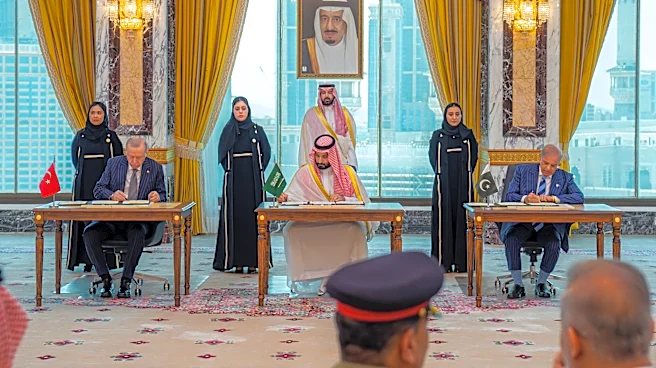
On April 30, 2026, Saudi Aramco formalized two new Long-Term Agreement (LTA) contractor pools in Dhahran. These agreements are set for an initial five-year term, with an option for an additional three-year extension. The first pool comprises 11 companies
selected for concept development, pre-FEED, FEED, and project management consultancy services. Notable firms in this group include Fluor, KBR, Worley, Wood, Technip Energies, Técnicas Reunidas, and McDermott (in partnership with SNC-Lavalin Fayez). The second pool consists of 18 contractors tasked with onshore brownfield engineering and execution. Key companies in this pool are L&T Energy Hydrocarbon, GS E&C, Technip Energies, Técnicas Reunidas, Sinopec, Max Streicher, Kalpataru, Archirodon, CPECC, Gas Arabian Services, and Bin Quraya. Four companies—Kent, Sinopec, Technip Energies, and Técnicas Reunidas—are included in both pools. Saudi Aramco's anticipated capital expenditure for 2026 is projected to be between $50 billion and $55 billion, with approximately $15 billion in contracts already awarded by early November 2026. Worley, Fluor, and Wood had previously confirmed their Aramco PMC frameworks in July 2026.
Why It's Important?
These long-term agreements are crucial for the global energy sector and the U.S. companies involved, such as Fluor, KBR, and McDermott. The substantial capital expenditure planned by Saudi Aramco, estimated at $50–55 billion for 2026, signifies a significant investment in oil and gas infrastructure. For U.S. engineering and construction firms, securing positions in these contractor pools ensures a steady pipeline of projects and revenue for the foreseeable future, potentially bolstering their financial performance and market standing. The agreements will drive demand for various industrial components and services, including onshore tie-ins, SCADA and RTU upgrades, electrical and instrumentation systems, power and control infrastructure, fabrication, protective coatings, valves, line pipes, and industrial equipment. This creates substantial opportunities for manufacturers, distributors, specialist subcontractors, and engineering service providers globally, including those based in the U.S., to become approved suppliers and delivery partners. The stability offered by these long-term contracts can lead to job creation and economic growth within the participating companies and their supply chains.
What's Next?
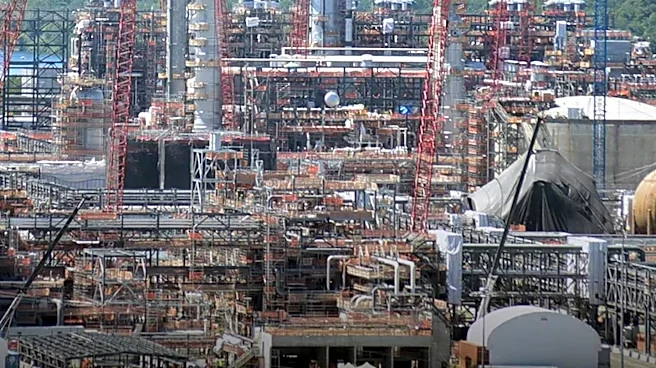
Over the next five to eight years, the companies within these contractor pools will be actively engaged in executing Saudi Aramco's extensive brownfield program, which spans seven operational zones including Manifa, Safaniyah, Berri, Qatif, Dammam, Abqaiq, Haradh, Khurais, Hawiyah, and Shaybah. The focus will be on delivering critical engineering and construction services to maintain and enhance Saudi Arabia's energy infrastructure. The agreements will lead to a sustained demand for specialized equipment and services, prompting manufacturers and suppliers to align with the procurement teams of the selected contractors. Companies not directly in the pools will likely seek opportunities as subcontractors or suppliers to the primary contractors. The ongoing projects will require continuous investment in technology and skilled labor, potentially influencing global talent markets in engineering and construction. The success of these projects will be closely monitored as they contribute to Saudi Aramco's operational efficiency and output capacity, impacting global energy supply dynamics.
Beyond the Headlines
The establishment of these long-term contractor pools by Saudi Aramco reflects a strategic move to ensure stability and efficiency in its massive energy projects. By locking in key engineering and construction partners for extended periods, Aramco aims to streamline project execution, reduce procurement complexities, and foster deeper collaboration with leading global firms. This approach also mitigates risks associated with fluctuating market conditions and ensures access to specialized expertise. For the U.S. companies involved, these agreements represent more than just contracts; they are strategic partnerships that could lead to technology transfer, knowledge sharing, and the development of new capabilities. The long-term nature of these commitments also suggests a focus on sustainable development and operational excellence within the Saudi energy sector. The ripple effect on the global supply chain, particularly for specialized industrial equipment and services, will be significant, potentially driving innovation and competition among suppliers aiming to meet the stringent requirements of these large-scale projects.